
Even though I feel hesitant to write it out in case I jinx it, I can’t help but celebrate. Y’all, 4 out of 7 days this week were seizure-free. Hip, hip hooray! That has felt so hopeful.
But I feel way more hope this week, especially around seizures.
Since seizures are kinda our world these days, I’ll share what I’ve learned in the last week. Consider this a less science-y Living with seizures 2.0.
Why it’s important to control seizures
This is a question I’ve not only asked of our doctor/neurologist, but of several other parents with kids who have seizures. I’ve asked them all the same question, “If seizures don’t cause damage, then why is it important to use strong drugs, no matter the cost, to stop them?” Because, what I noticed is that many of the anti-seizure drugs either have really bad side effects (like blindness or leaving you in an almost zombie-like state). Which is why, if seizures aren’t that big of a deal, then why is it so important to stop them no matter the cost of the side effects?
I think I found my answer. Or, at least, an answer that makes sense to me.
At this point, any seizure that lasts over 5 minutes (the limit used to be 30 minutes, but science is thinking of shortening that period to 5) may be considered something calleed “status epilepticus.” Eloise’s seizures, since coming home, have almost all been less than 90 seconds. However, she has had 5 seizures that can be categorized as “status epilepticus.”
This is important. Why?
There are around 150,000 cases of status epilepticus each year in the United States… Research published by NCBI estimates that up to one third of people who experience status epilepticus die from it. It can also cause brain damage.
“What is status epilepticus?” epsyhealth.com
What that means is that any short seizure (which Eloise has a LOT of these days) has the potential to progress into a longer one — a status epilepticus. And, according to the research, these 5+ minute long seizures can result in brain damage or death in up to 1/3 of cases.
A light bulb turned on for me.
Knowing this has helped me tremendously.
On one hand, it means that we don’t have to worry as much with all these short seizures — really, likely, they aren’t harming her. But on the other hand, it does mean we need to find a way to reduce or end her seizures completely if we want to cut out the possibility of brain damage or death.
- So far, Eloise’s seizures have come along with a fever and/or a virus.
- In addition, kids with her deletion have a much poorer-than-usual immune system which means simple viruses hit harder, more often, and last a lot longer.
- Which means, in Eloise’s case, something as simple as the flu could result in life-threatening seizures that send her to the hospital and leave her permanently brain damaged.
Of course, that sounds scary when you write it all out like that. I already know of one case in Finland where exactly this scenario happened when the little boy was 1.5 years old and he contracted rotavirus. Years later, he now mostly lives in the hospital.
I know this sounds pretty un-hopeful right now. But stay with me.
Some good news
This gene I just realized Eloise is partially missing, SCN1A, is one that I’ve mentioned is really important. It also very likely has a huge effect on whether or not her seizures can be controlled.
You see, there’s something called dravet syndrome that’s associated with that specific gene SCN1A. When a child has a copy of their SCN1A gene that is mutated or deleted, Dravet syndrome can occur. With Dravet, a child often develops fever-related seizures in the first year of life that are difficult or impossible to control. (It also comes with a whole host of other problems like behavior issues, autism-like characteristics, insomnia, and severe mental disability.)
There are two groups I am a part of with kids that have SCN1A deletions or mutuations, and the posts are just full of parents who have been struggling for years and years and years to find a treatment that controls their kids’ seizures. I admit, that still doesn’t sound very hopeful.
But.
I have now accidentally stumbled upon two cases where it seems that treatments have gotten a kids’ seizures under control. Which means, if I get the time to look, there have got to be more.
- One was a family I mentioned in Turkey whose son is on a ketogenic diet. (They said he’s been teething and had some pretty bad illnesses STILL without seizures!!)
- Another is a family in New York. Even pre-COVID lockdown, using cannibis, the little girl went from hundreds of seizures every year to less than Eloise had just this last week. I’ve reached out to the mom and, hopefully, I’ll hear back from her soon.
If two families have found two different methods to maybe completely reduce seizures, then that, hopefully, means that we can, too.
I plan to start some of my own research
I love data. It makes me feel safe and sane and like I’m living firmly planted in reality.
Without data, I feel like I’m being ruled by my feelings in a distorted reality. Which is why, with a deletion like Eloise’s where there is, essentially, no research or data (unless you count a booklet based on just a handful of cases), it can make me feel really overwhelmed because I’m not sure if I’m making decisions based on my own bias or what’s really true.
You see, coming from my background in working for a startup, my brain has been trained to try to turn everything into large datasets that can be studied and used to make decisions. (For example. Is there a closed Facebook group full of posts on a very specific topic? Then I need to find a friend to help me scrape data from all the posts and comments to find out the amount of times different medicines are listed along with positive or negative words to see what works and what doesn’t.) And I may still do that. In fact, a friend is already trying out a few different short scripts to help me try that out.
But.
Now that I’ve found these two cases where families who were no longer posting in the facebook groups seemed to have found ways to control their kids’ seizures, it got me thinking about something Brian said.
“Mallory, you probably can’t really scrape data from these groups to find out what medicines work because the people posting are likely the ones for whom medicines are NOT working. If someone has found a treatment that works, they probably aren’t posting in these groups anymore because they don’t really need them any longer.”
That seemed true.
So.
Rather than scraping data, maybe I can just get the information human-to-human, like I used to do when I would follow up in our 2000+ person company. I would reach out personally to humans who were struggling across our organization. It was a lot of work, but it worked.
Which is why my hope is, in the coming weeks, that I can sit down and start reaching out to around 50 strangers in one of the small groups and asking them a few short questions like these:
- What treatments have not worked to treat your child’s seizures?
- What treatments have made seizures worse?
- What treatments (if any) have you found success with?
- What sodium channels are affected with your child?
How many of these strangers will respond out of 50? My guess is 10.
But maybe, just maybe, in those 10 responses we might start getting even more insight that will help far more families than just ours.
Because Brian and I have got to do everything we can to stop these seizures as soon as possible.
Our Christmas
It’s so funny. In Estonia and Germany, Christmas is definitely on the 24th. In Estonia, “päkapikud” are little gnomes that leave kids candy leading up to Christmas day. Advent calendars are something that everyone has. Santa shows up in person (which is always someone’s family friend or uncle dressed up in a Santa costume). Kids have to recite a poem or sing a song for every gift. And a visit to the town Christmas Market is a must-do.
But us? Brian and I are lazy.
I bought a fake tree from IKEA last year that I meant to use as all year round decor and then as a lazy, last minute Christmas tree. And that’s exactly what I did. My mom had us paint a few santa ornaments, so I put those up. And, well, that’s basically the extent of our christmas decor.
Thankfully, snow came in a big way. It was so beautiful. So Brian and I just had regular days, except I got a little more decluttering done. Which felt great.
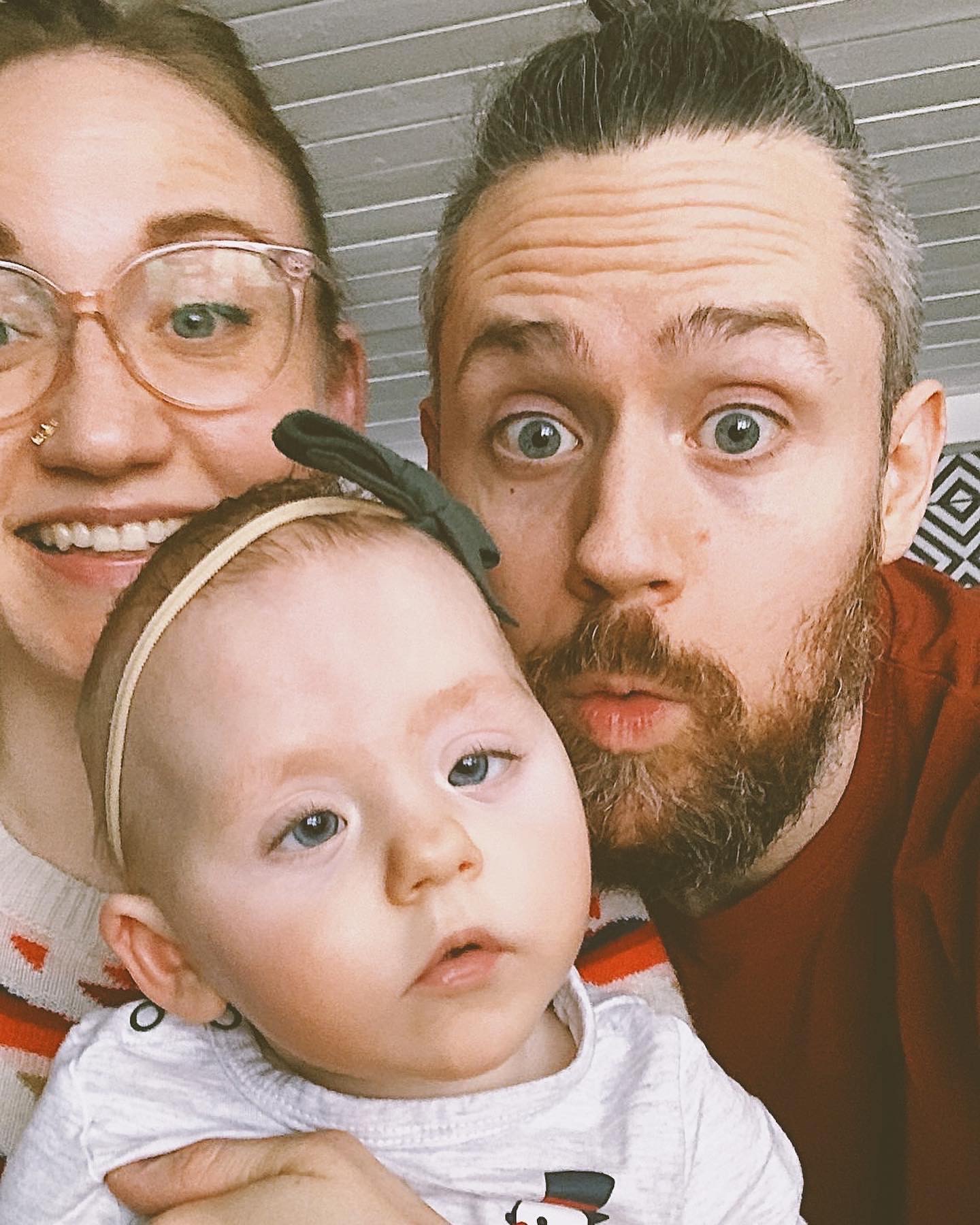
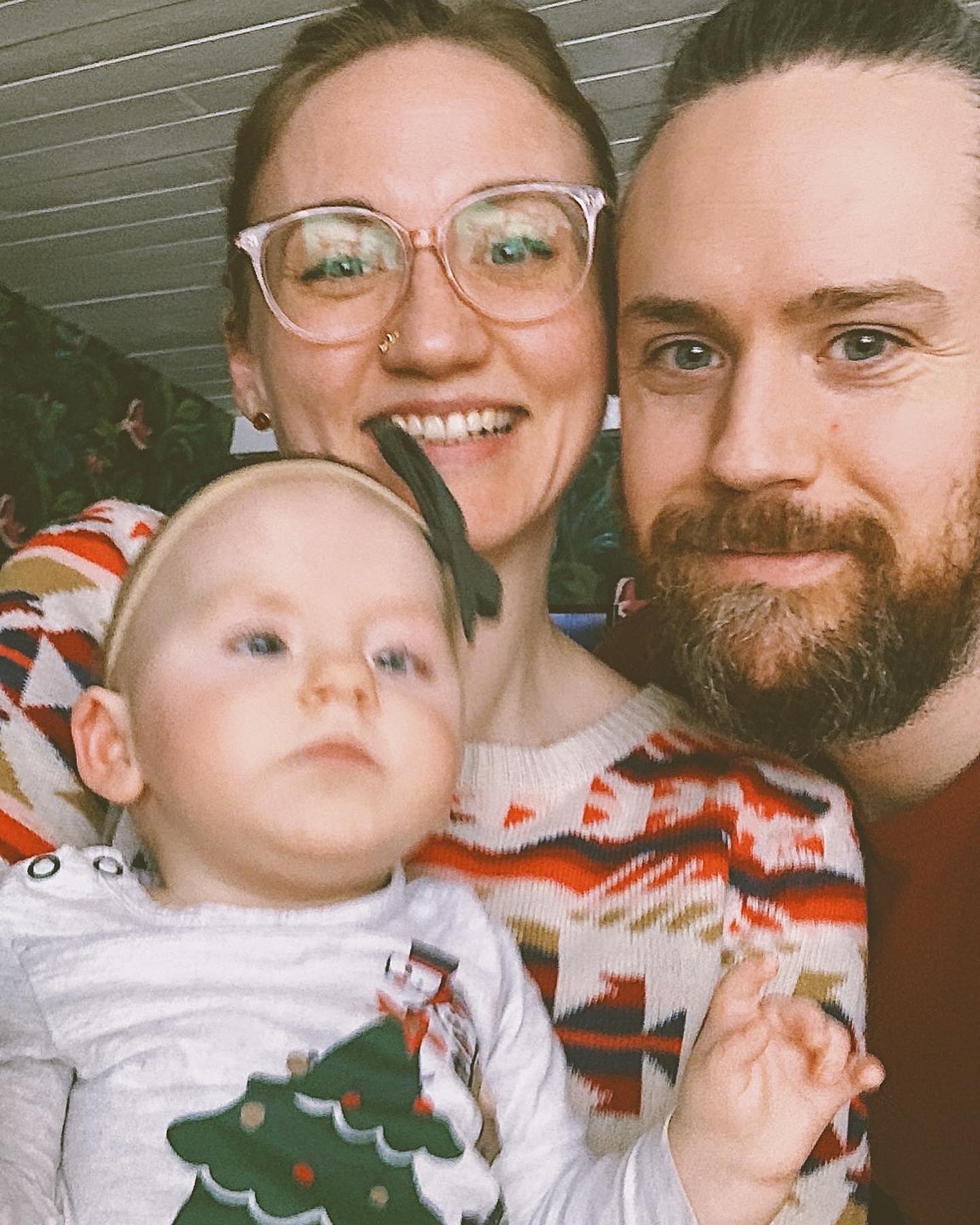
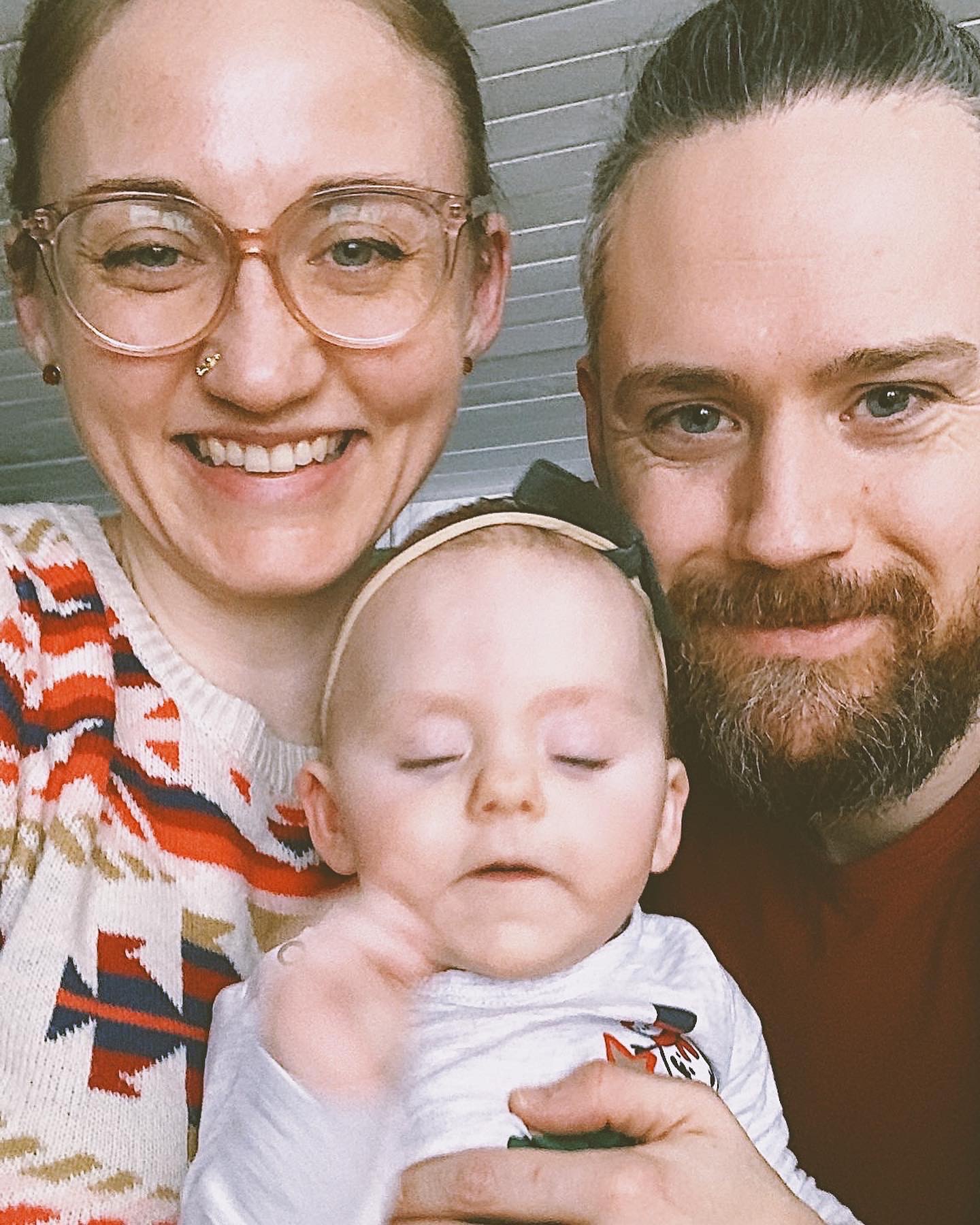


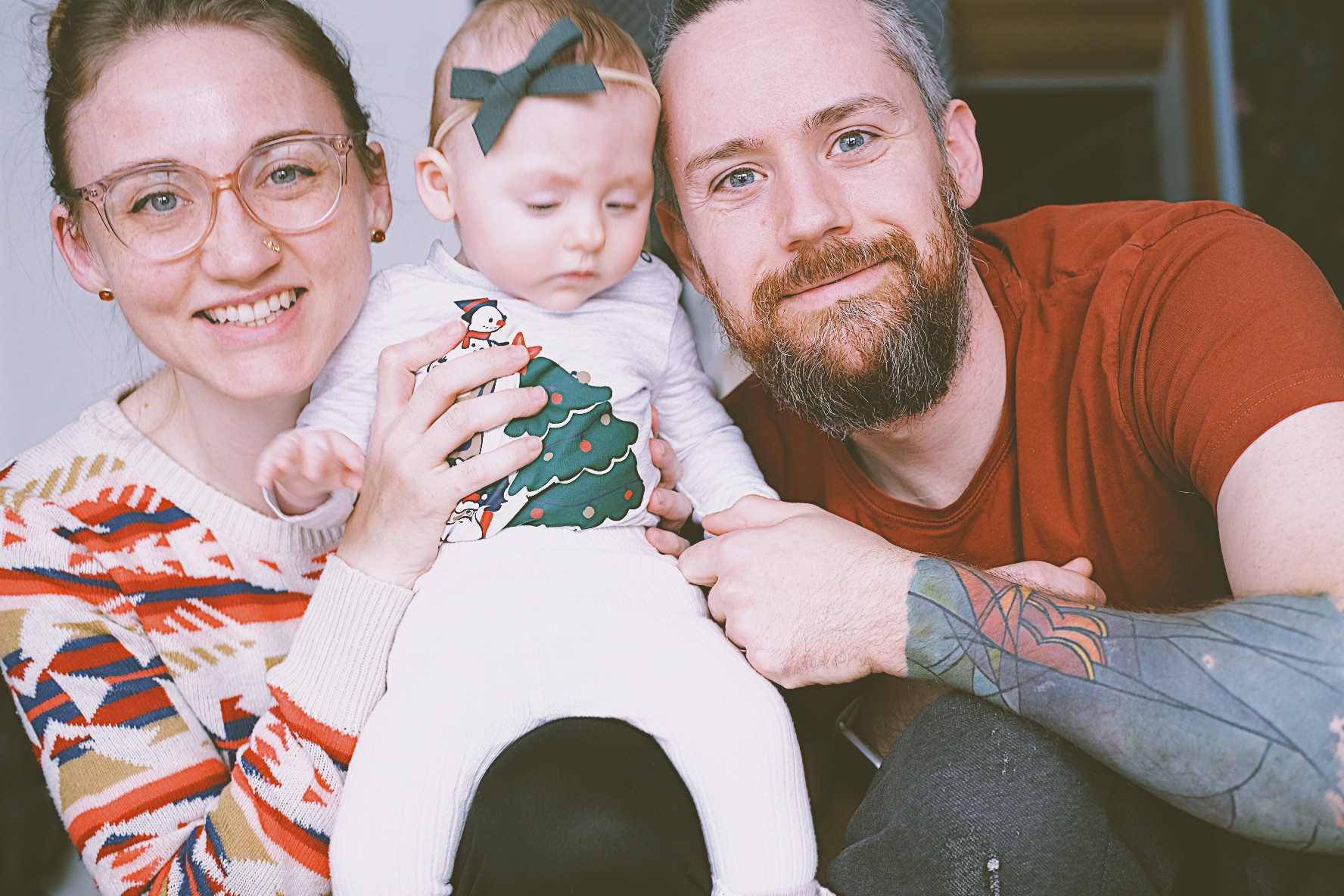

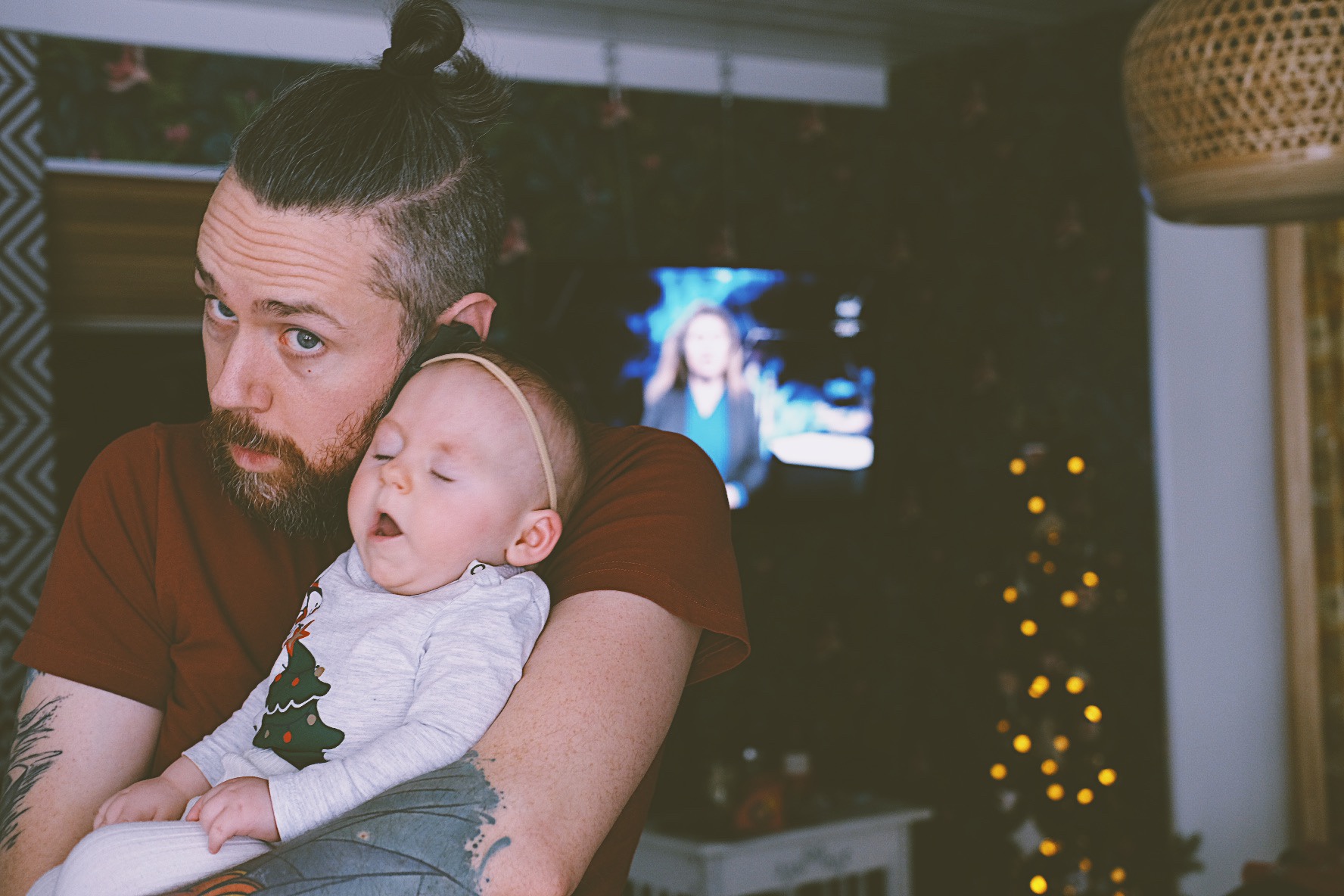
I was going to write on our new arrangement Brian and I have been experimenting with (that’s been working really well!). Or about our focus for 2022 that both of us are excited about. Or about some beautiful revelations that have happened in me in regards to Eloise’s condition.
But I’ll save those topics for another day.
For now, I’m just really really really really grateful that Eloise is on her third day of no seizures. Maybe it was the turmeric we started on Friday thanks to a friend’s suggestion, or maybe Eloise’s illness is finally over, or maybe it’s a great Christmas gift from God, or maybe it’s just a coincidence — I have no idea.
But wow I’m thankful.
Hugs from the happy Taulbees who are feeling great right now.
Mallory, Brian, and Eloise
 Eloise The Tiny Fighter
I loved reading your blog! It was good to be able to hear whatâs been going on with you all! I also loved the photographs! The snowy scene out doors is beautiful and reminds me of the area where my husband is from near Lake Superior. I continue to keep you all in my prayers! May the Lord continue to bless you in the New Year!
â¤Karen
Sent from Mail for Windows
LikeLike