If you know our story, you know we bought a fixer-upper home while we still didn’t know if any of our fertility treatments would work. Our house was a project Brian and I could work on together whether or not our dream of having kids ever came true.
Heads up: If you already know our story or don’t like before/after home photos and just want to find out how to donate, jump to the section at the end.
The story of our fixer upper
Our fixer upper is still technically classified as a garden home (aiamaja) and, because it’s so old, as long as we don’t expand beyond its current foundations, then we’re mostly free to do what we want. Like many Estonian summer homes built in the Soviet era, it was built in pieces. There was probably an original summer home (less than 20m2/200ft2) with a sauna. And then they added on another tiny room. Then another slightly larger space. Then another space. Then another room. From our count, it was built in at least 6 different stages over the years — which means the inside was a collection of strange, sometimes unusable spaces.
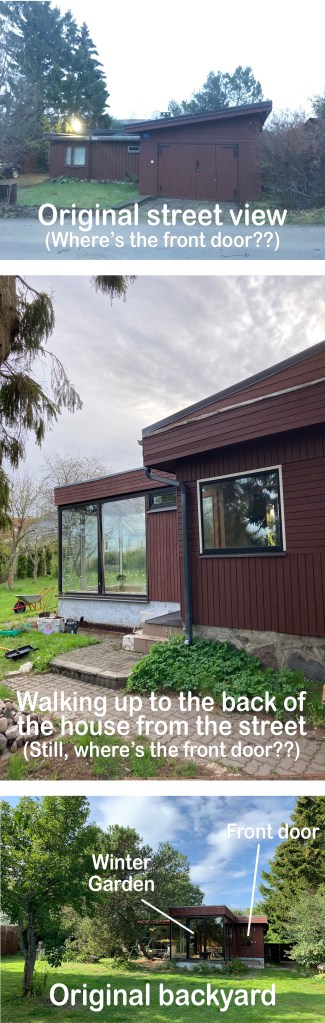
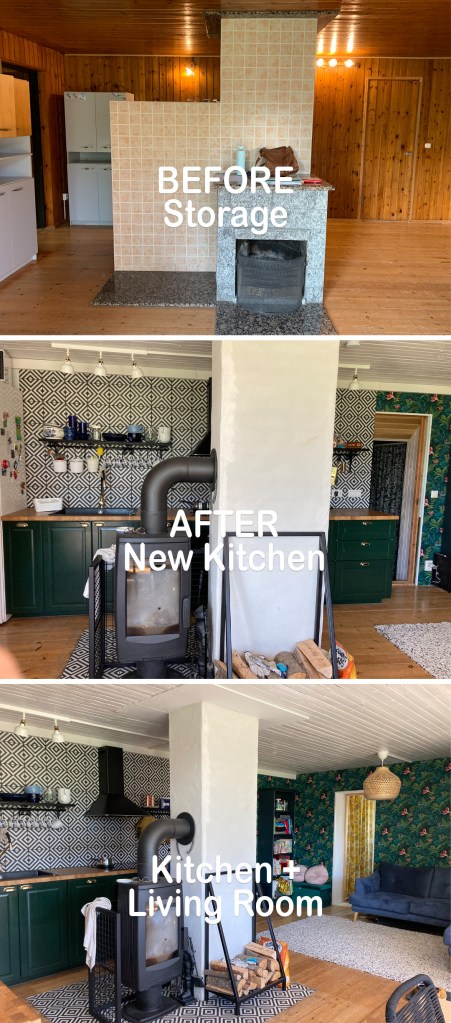
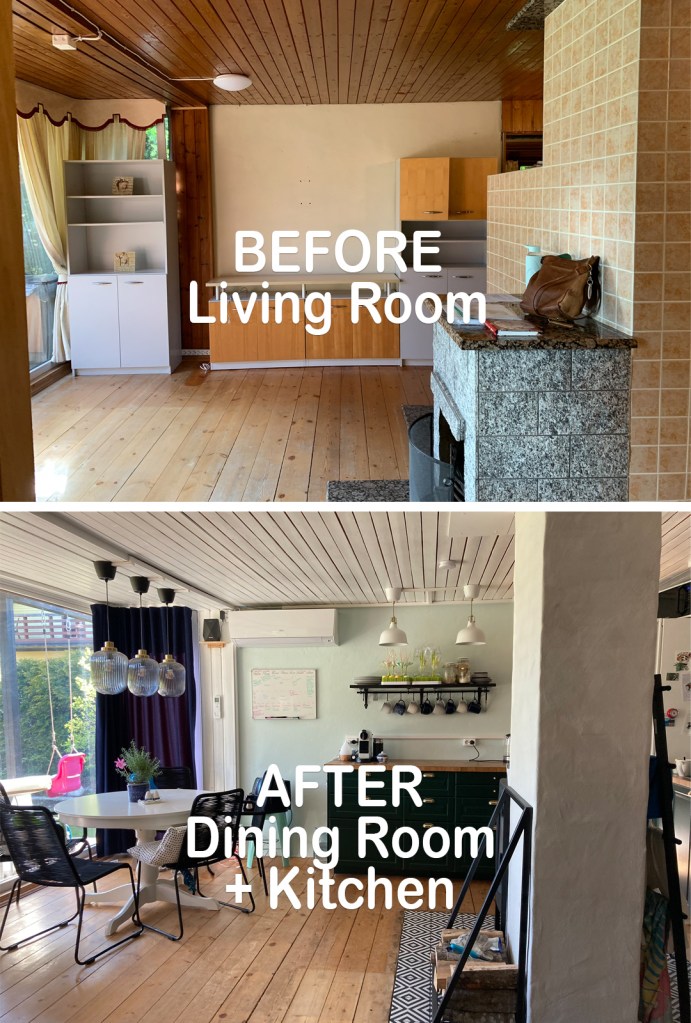
Once we moved in and started renovating, our kitchen ended up in 3 different spots in the first 12 months as we struggled to find the right place for it where it fit. But we figured it out. And, today, I’m proud of how far our home has come since we bought it 3 years ago.

Why we decided to take on a major home renovation for a “pool”
We knew our lives would change when we had a kid. We knew our renovation plans would adjust. We knew our perspectives would shift.
But, as I explained, we didn’t know what we wanted to do with that part of the house. And we especially didn’t imagine tearing it down and re-building it just to build a room where our kid could swim every day.
I mean, come on, having a place to swim in your home sounds like a luxury. But when the prognosis for your kid is, at best, the developmental age of a 12-month-old but your doctor says “Get her in the water to swim as often as you can because this will help build connections in her brain,” and you’ve heard from more than one parent of a disabled kid that they believe water was what got their child walking, then you start brainstorming how you can make daily swimming happen in the midst of 5 therapy appointments a week and both Brian and I returning to work.
Therapist after therapist and parent after parent talk about how much swimming is great for developing the brain. And the earlier those neural connections begin forming, the more impact it will have on her future. Early on, I asked several parents what therapy helped their kid the most. One mom of a kid like Eloise said once her son started walking in the pool every day with therapists, he quickly began to walk on land.
The other day I ended up listening to a podcast episode “Impossible Weight” where a man is the only known case in the world of a specific neurological disease where he went from complete paralysis (he couldn’t move at all nor speak and the doctors spoke about taking him off life support) to functioning again. The wheels began to turn in my mind. There could be even more hope than we ever dared imagine for Eloise’s future.
Therapy, early therapy done often, could make a massive, massive difference in Eloise’s life. Swimming had to happen in Eloise’s life.
I was hoping we could just drive 15 minutes to the pool in town but there were many days I planned to go there with Eloise but then life happened. A bad nap. A meltdown. A pain episode. Therapy that came at an odd time. So Brian and I knew that if we wanted swimming and water to be a part of her daily life, it needed to be at home.
And that, my friends, is how we decided to buy a metal-lined electric hot tub (cheaper than a swimming pool, and cheaper than a real hot tub — which doesn’t have enough room in it to walk or stand), with removable seating so we can keep it at the right temperature for Eloise and allow her to swim or walk even when she gets big. And how we realized we can’t just put it in our yard because property laws say we need 4meters/yards between a permanent structure and our property line. And so we reluctantly admited we really should put it indoors, which will make it easier to use all year round anyway.
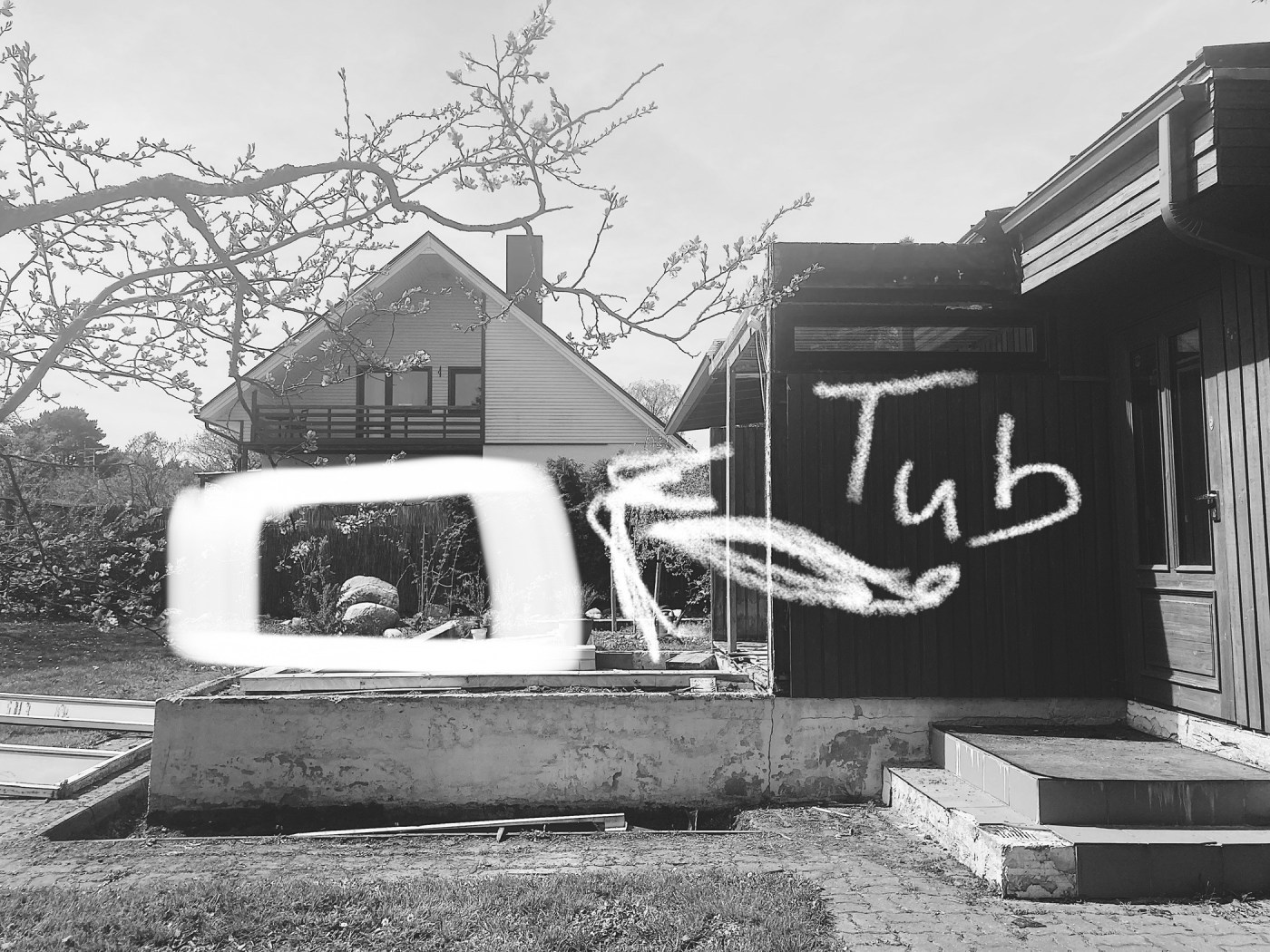
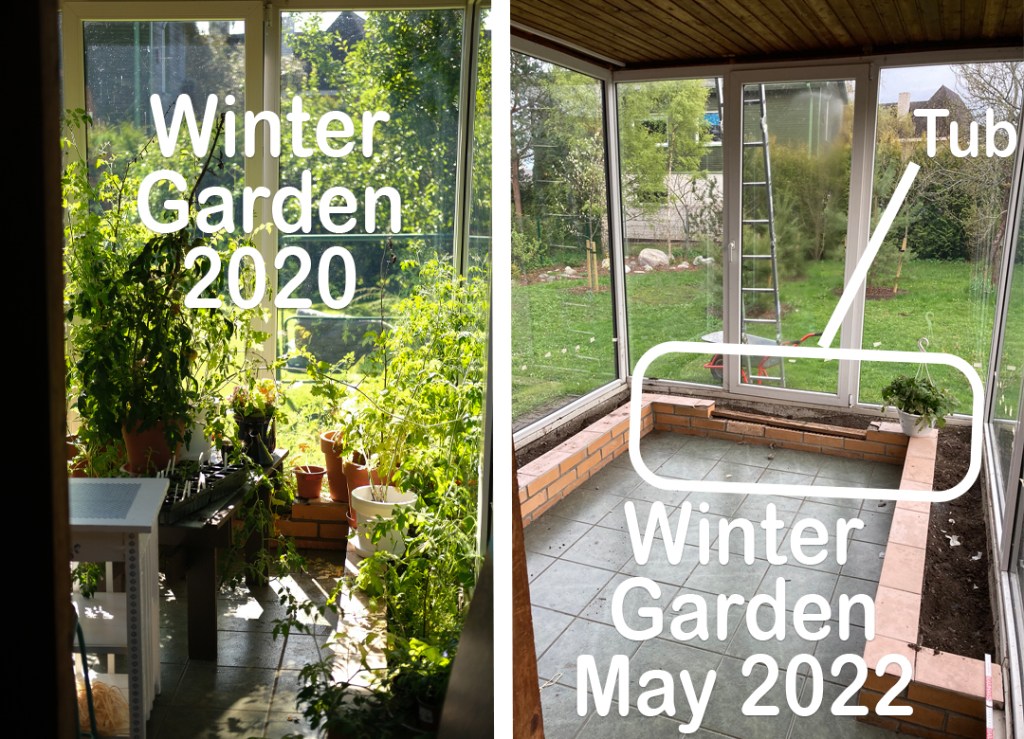
The only place that ended up working to put it in our home was a place we had been ignoring — an uninsulated, unheated room with rotting ceilings and crumbling floors room called a “winter garden.”
The area we’re renovating
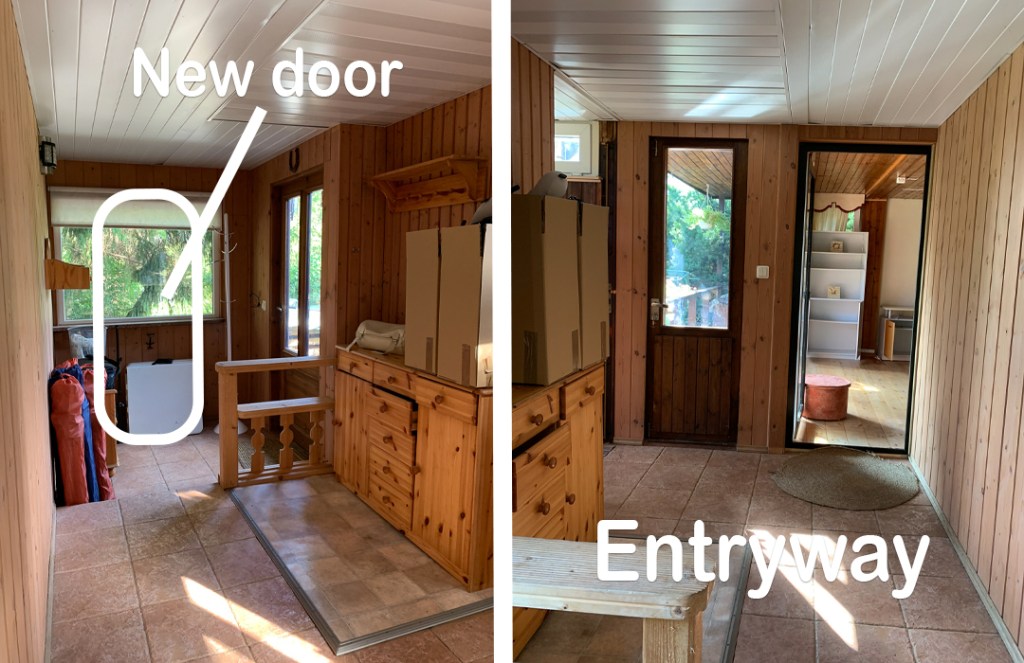
One of those strange, not very usable spaces of our house I mentioned earlier is our entrance and talveaed (winter garden). The area is unheated, has 6 different flooring materials with varying heights, absolutely no exterior insulation to keep out the cold, leaking ceiling, crumbling floor, and, underneath, a large portion has no foundation. (We just remove the rotting floorboards and replace them with new plywood every few years.) The winter garden had exposed dirt and floor to ceiling windows on three sides. So, during the summer, the entire area is a sauna. But during the winter, it’s a freezer (sometimes we literally put our extra food out in the entranceway when we didn’t have enough freezer space).
Before this, other than accepting that the entire area needed to be torn down and rebuilt because everything was rotting and uninsulated, we didn’t really know what to do with it. The only idea we had is that we knew we eventually wanted to build a second story room on top of the winter garden — because that is the only place from our house where you can see the sea all year round.

The winter garden room made a lot of sense to become Eloise’s new mini pool room. It was unusuable, we didn’t have plans for it, and the dimensions were just about perfect. And, since the winter garden is connected to our unheated entranceway, the only way to renovate it was to renovate the entire area. So, while we’re at it, we’re moving our entranceway to the side of the house so visitors can actually find where to get in. And we’ll make the entire entrance wheelchair accessible because, even if Eloise walks someday — which we hope she will — kids like her still use wheelchairs quite a bit.
While, after lots and lots of discussion between Brian and I, we finally found relief at figuring out how to make the hot tub work for Eloise, we couldn’t just snap our fingers and make the renovations happen overnight. With the housing shortage in Estonia, the influx of Ukrainian refugees, and high inflation, we heard from everyone that all builders in Estonia were busy.
We hoped and prayed and, to our shock and surprise, a builder who had worked on our house before and we really liked turned to be available to come work for us. He was available because he’d decided to stop taking building jobs — unless he really liked the person asking.
Monday of last week we called him. Tuesday he came out. Thursday he gave us a quote. Friday the big waste container arrived. And by Saturday he started demolition.
This remodel will cost us over half our savings.  But when you have a kid as adorable as Eloise, you realize that you will spend all you have to give her the best shot of a life full of joy.
People call parents of kids with disabilities heroes an awful lot. But the reality is, if you were in the same position, you’d probably be doing the same thing.
Speaking of you, you might be asking how you can help.
How you can help if you want to
A few people have reached out, asking if they can donate somehow or give money towards our building project to help Eloise.
Oddly, although we didn’t ask for help from friends and strangers, we did ask for help from a local children’s fund — and they responded they are unable to help.
Originally, we ask for help from friends and family and strangers for a few reasons.
- Technically, we have enough in our savings to cover it. It just means, well, after paying for it we will have a lot less savings. Which means, well, it means what it means when you have less savings.
- It feels weird to ask for financial help when there are over 20,000 Ukrainian refugees with nothing that need help here in Estonia.
It still makes me feel so guilty though, letting people give when there are so many other worthy causes out there. Yet if we were asking for help from a children’s fund, then maybe these friends were right. Maybe it’s okay to ask for help.
But how could I make my guilt feel a little better?
I had an idea.
Unless you ask us not to, we will donate half of all the money people give to this project to aid local Ukrainian refugees. The thought that with everything people give, that we can then pay forward some of that to others that are also in need feels really good. If there’s some way we can find a family who has a kid with disabilities, then that’s who I would like half of the money to go to.
The entire project will cost somewhere between 20,000 – 30,000€ (that is about the same amount in U.S. dollars). We didn’t create a GoFundMe because, well, it just seems weird. And they also take a cut.
Still, though, if you want to help fund this project for Eloise,
Here is info on how to donate
- Here are our USA donation details.
- Here are our EU/UK/Elsewhere donation details.
Stay tuned for periodic building updates. And thank goodness interior design is a stress reliever for me.
All our love,
Mallory, Brian, and Eloise (who kindly took a few longer naps today, which helped me write up this post)
 Eloise The Tiny Fighter