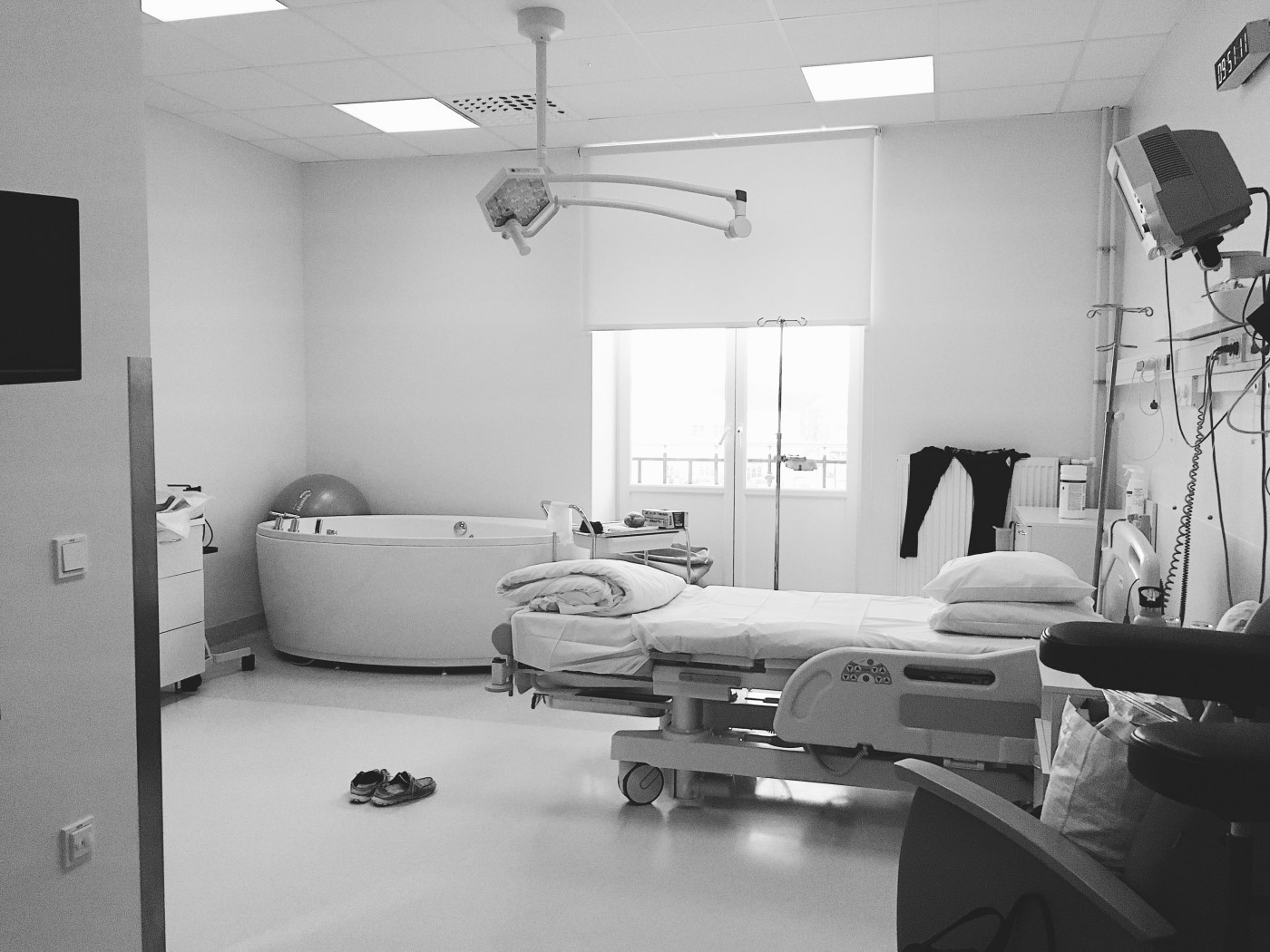
I brought my nice camera to the hospital. Yet it sat inside my suitcase, untouched, for our entire 10 day stay.
Why?
Because I didn’t want to remember.
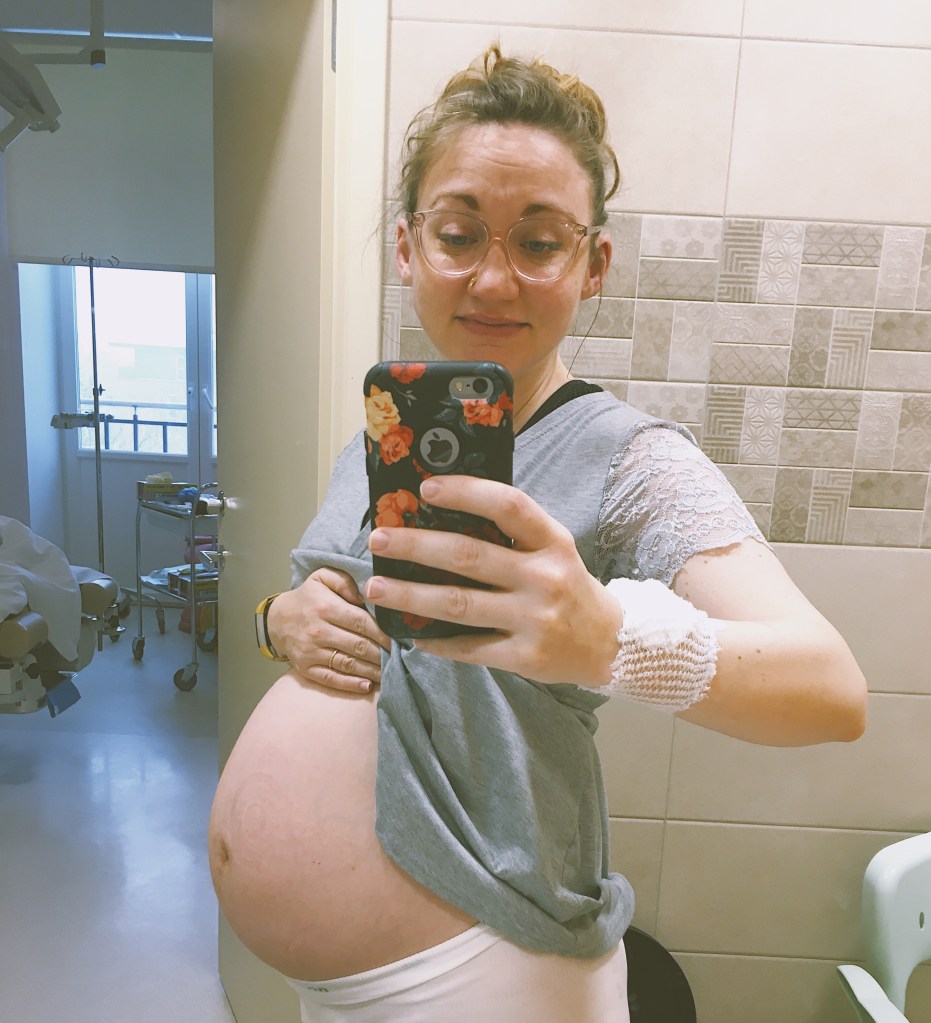
Day 1: Friday, January 29 (Eloise’s birthday)
9:15 am | Pregnancy ward
I’d been in the hospital since Monday when they’d started trying to induce. I was sick of being separated from Brian and so ready to meet our baby girl.
Finally, after the first morning rounds, the doctor said I was ready. I called Brian, excitedly. “Pack your stuff and head to the hospital. Today will be the day.”
Noon | Birthing suite

Brian lugged up two suitcases. One for me — I’d had it packed since mid-December, just in case things went south and we had to deliver her in a hurry. And one for him — just in case we needed to stay overnight and they let him stay, too.
We hugged tightly. We were both excited, and my contractions — at least the big, painful ones — hadn’t started yet.
“We’re going to have a baby! We finally made it, we’re going to have a baby!“
We pulled apart and Brian looked at me, suddenly serious. “She’s just so little, I hope she’s okay.“
I had seen a million screens that week that kept showing me a great heartrate with no problems. I felt confident. “I’m sure she’s just fine.”
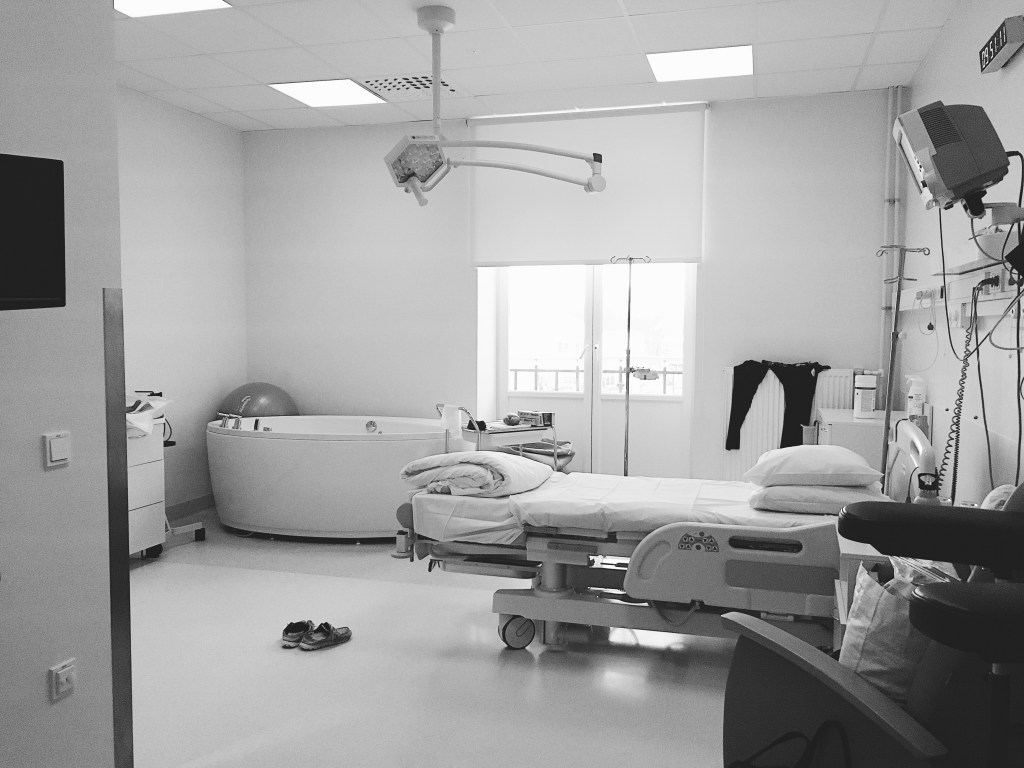
1:15 p.m. | Birthing suite
Our private midwife had had a doctor’s appointment that morning, so she came a few hours after Brian arrived.
I was already hooked up to the machine that monitored the baby’s heartrate and my contractions. Or, well, lack of contractions. That’s why our midwife started getting out the drugs upon arrival — it had several hours since they’d broken my water, so my contractions should have already begun. The drugs would speed things up.

Suddenly, as our midwife was fiddling with vials on the other side of the room, pain started rushing in. I used the breathing techniques Brian and I had learned from youtube a few weeks ago. Breathe in – 2 – 3 – 4, breathe out – 2 – 3 – 4 – 5 OWW 6- OWW – 7 OWWWWWW.
Brian looked excited.
“Are you having contractions? Cause it sure looks like it on the screen.”
“Yes,” I grunted out, between counting my breaths.
The room filled with silence for a few moments as I concentrated on not feeling the pain.
“Umm, Mallory, I’m watching the screen and that line that is her heartrate seems to be plummeting off the screen. Is that normal?”
3:00 p.m. | Recovery room, maternity ward
A few hours earlier, Brian saw baby’s heart stop beating on the monitor in our plush birthing suote. Minutes later, I was in an operating room and a doctor was asking me about the last thing I ate. I remember telling him, already groggy from the gas coming through the mask they were in the process of putting on me, that I’d had a handful of peanuts and a banana a few hours ago.
When I woke up, a nervous Brian was sitting next to my bed in a dimly lit huge room with our bags in a pile on the floor. There was a flimsy curtain half surrounding my bed.
If he was the type to wring his hands, he would have been wringing his hands at that moment.
Our baby wasn’t with him.
Immediately I asked, “Did she make it? Is she alive?”
Brian nodded and I immediately felt relief flood my body.
She made it. She was alive.
I’d been so afraid. So worried. Her tiny size, under the 3rd percentile, had made one of the best doctors in Estonia so nervous that he had a plan to take her via C-section at 34 weeks. But when our weekly ultrasounds and CTGs (nonstress tests) showed a tiny, active baby with great blood flow week after week, he decided we could try to either induce a little early, or carry her until natural labor started.
We opted to start the long, slow induction process at 37+5 weeks. But it turns out the contractions had been too much for her, her heart had stopped. So Eloise made her grand entrance via emergency c-section.
I immediately started crying, so grateful.
Then I noticed Brian’s face. It was still worried. There was more.
He started listing off the problems a doctor had told him. There was something unusual about her ears and her nose. She had some problems with a few fingers. A few of her toes were fused together. Something about her heart and maybe a problem with pooping. They thought she might have a “syndrome” and had called the geneticist, who would see her in a few days. For now, she was in NICU (intensiivravi).
I felt my pulse start to rise. NICU? But was she okay? When could I see her? Had he seen her?
He pulled out his phone to show me his only two photos of her. One the midwife snapped and the other he had taken.
“I got to touch her for 30 seconds. She recognized my voice.” Brian started crying.
In order for that to happen, our private midwife had had to fight the staff in the NICU to allow Brian to see our baby girl just once. They didn’t want to let him — husbands weren’t allowed to visit NICU because of Covid, and they didn’t want to unhook our baby from the machines monitoring her vital signs. But, thankfully, our midwife insisted.
The staff huffed and puffed and removed our little girl from the host of wires and cords she was plugged into in the ward and wheeled out her little clear bed into the hallway. Their faces were not happy. But it didn’t matter — Brian was able to see our little girl. He gently touched her cheek and she snuggled up.
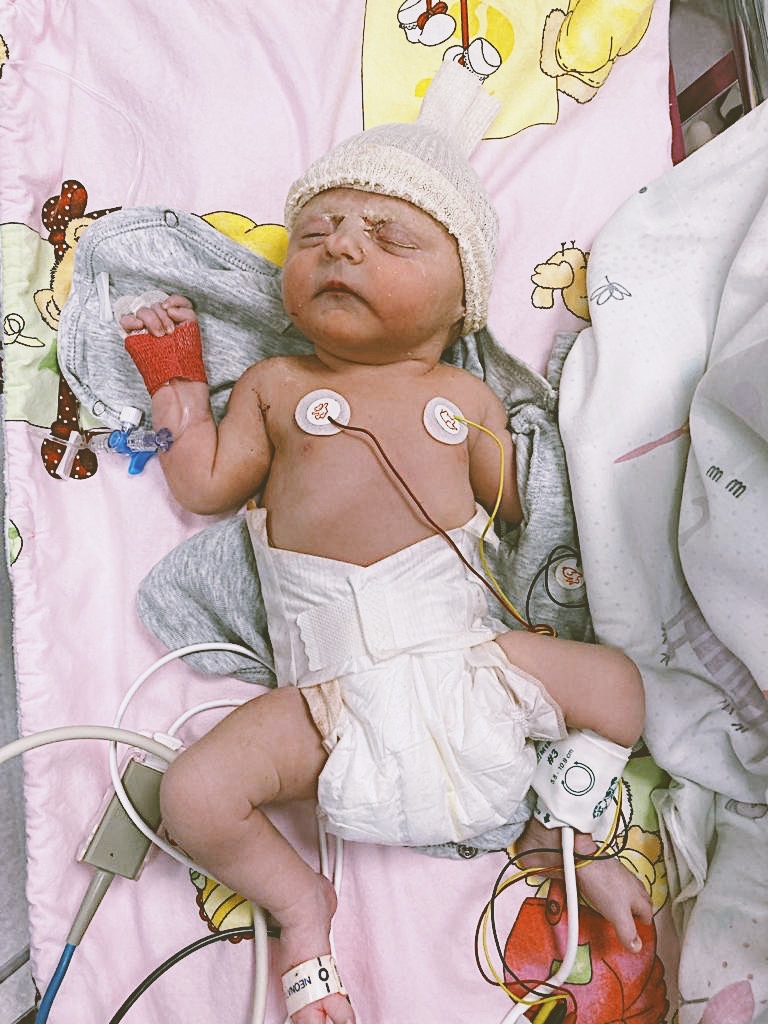
But, just as soon as his first moments as a father began, time was up. The staff told him that was enough, they were already breaking protocol. Away went our tiny little Eloise.
Our baby. She was alive.
Wait.
I looked harder at the photo. I knew newborn babies often resembled gnomes, but it was true, something looked “off” about our baby. But, then again, I reassured myself, she looked just like the women in Brian’s family — and they weren’t unattractive. I was imagining things.
Focus — these problems. Were they really problems?
I thought, surely, the doctors were mistaken. She was just fine — she just might need a little surgery help on her tiny toes. Maybe kids would make fun of her fingers, but we could probably get those surgically fixed too, right? I mean, she had been a twin, after all — physical anomalies were much more common when your body had 2 babies to take care of.
Minutes later, a nurse on duty told Brian he needed to leave the big recovery room I was in. Our time was up. COVID rules stated dads could only be there for 15 minutes. They’d already let him stay long past that by waiting until I woke up from anesthesia.
And, no, Brian couldn’t come back to visit.
So, unceremoniously, Brian left my side.
And the hellish 10 days I desperately wanted to forget began.
6:00 p.m. | Recovery room, maternity ward
Strangely, in my pain-induced stupor, I’d become more American than usual. In my childlike Estonian I had been chatting up the nurse on duty and the nurse who was tending to me. I was asking them their names, paying them (honest) compliments, and asking how long they’d been doing this.
I think it was a survival technique — get them to like me, then maybe they’ll let me see my baby. That was my plan.
I worked hard. I made them laugh. I used every Estonian colloquial phrase I knew to show them that I was a worthy foreigner who had learned their language.
I wanted to make sure they saw me as human rather than as just another patient. I wanted them to fight to make things happen.
7:00 p.m. | Recovery room, maternity ward
A young doctor came by and sat next to my bed, clutching a clipboard. In English, she repeated the same things Brian had told me earlier, but added that all of Eloise’s vital signs were strong and, other than low blood sugar, she was doing well.
I felt weary, but grateful.
“Any idea how long she needs to be in NICU?”
“Oh, she’s doing so great maybe she can get out Sunday? Monday?”
“And when would we be able to take her home?”
“It’s hard to say, but I would guess definitely by Friday.”
I breathed a sigh of relief.
Of course she was doing great, she was our baby after all. This wouldn’t be so bad.
8:00 p.m. | Recovery room, maternity ward
After nearly 5 hours of waiting, the nurse tending to me proudly told me that, at this hospital, mothers could go see their babies in the intensive care unit (what I’m calling NICU because I’m American) any time they wanted.
Ironically, she told me this after telling me for the last 4 hours that I couldn’t go see my baby until I was up and walking and had managed to keep down a small carton of peach-flavored yogurt. Motivation, apparently, to get me moving after the c-section — to go see my baby.
Instead, it set the tone for my stay in the hospital.
To me it meant, “We are more competent at taking care of your baby than you are. We tell you what you should and should not do. If you break our rules, you pay by being separated from your baby.”
How was it that strangers, who hadn’t taken part in our journey at all, were allowed to see my baby and care for her for 7 hours while I couldn’t do so until I could manage to eat a tub of yogurt and walk around after my lower abdomen had been cut open?
It made me feel like a child in trouble, sent off to time-out. But, instead of a corner in the living room, my time-out spot was a hospital bed with a catheter and my nearly-dead cellphone. And a husband already sent home hours ago.
8:30 p.m. | Recovery room, maternity ward
Every step I took around the recovery room was agony.
An hour ago I’d tried to get up and walk, willing myself to move in order to prove I was ready to see my baby — but I’d nearly passed out from the pain. Afterwards, I threw up the yogurt I’d worked so hard to eat.
I needed to see my baby.
8:42 p.m. | NICU
Finally the nurse was satisfied with my progress.
My “minder”, as I’d come to think of her, helped me walk to the elevator. She carefully showed me the 4th floor button — and explained that’s where my baby was.
Moments later, the elevators opened to the same floor I’d been on just a few hours ago. That time I’d gone to the right — to the plush, fancy, newly renovated birthing ward. This time, I was going to the left — to the locked doors and dark hallway of the intensiivravi. The neonatal intensive care unit. NICU.
My caretaker gave the nurse behind the glass paneled door a friendly wave. The doors flew open.
It was finally time to see my baby.
8:47 p.m. | NICU
My minder lightly held my arm as I hobbled through the lightless hallway and into the bright lights of a room on the right.
In the middle of this huge space, in a clear cot, under what seemed to be layers and layers of fabric and wires, lay a baby.
My baby.
Our baby.
My minder directed me to a sink on the wall, where I dutifully washed and disinfected my hands, the anticipation building up inside me.
It was happening. I was going to see her.
I took a deep breath, turned around, and leaned over Eloise’s crib — the NICU nurse and my minder hovering nearby, watching me expectantly. I can’t say this was how I’d pictured our first meeting.
I reached out my hand to touch her.
“Wait! You can’t touch her with that cannula on your right arm. Only your left.” the NICU nurse exclaimed in Estonian.
I stopped mid-reach and stared at my right wrist with surprise. I had the thing in my arm that they put there to hook me up to IVs. Apparently, whoever had used it last hadn’t re-covered it.
I shot a helpless glance at my minder. She patiently explained in careful Estonian that because it wasn’t covered with gauze, it was considered an open wound and a risk to my baby. I’d have to keep my right hand behind my back. I could only touch her with my left.
I re-focused.
There she was, sleeping peacefully despite the harsh glare of flourescent lights, wrapped in a fuzzy beige blanket. A little bottle nipple next to her mouth with a piece of gauze shoved in it.
“You can take a picture.”
The silence was broken by my minder. I hadn’t planned on getting out my cellphone, especially since the nurse had already explained to me cellphones weren’t allowed. But, well, Brian would probably appreciate a photo of her.
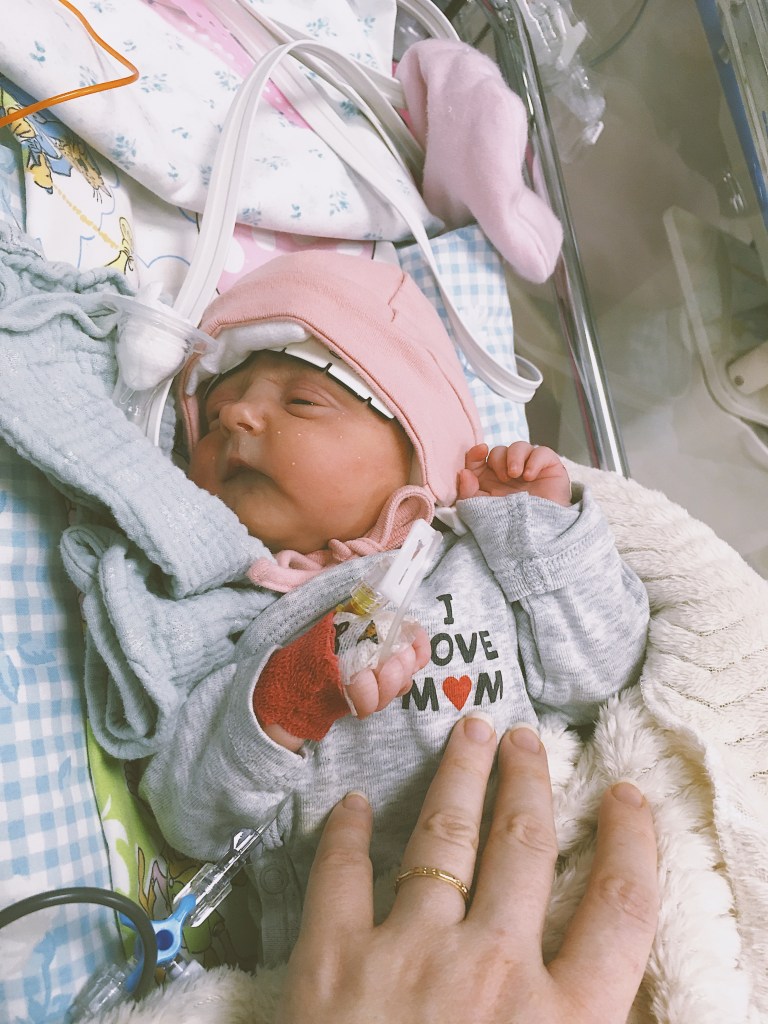
A tiny surge of annoyance rushed through me. After reading books on becoming the type of parent I wanted to be, I’d planned on likely not giving her a pacifier or bottle for awhile — long after our breastfeeding rhythm had been established. A choice already taken away from me.
I let my mild anger go and re-focused. This was my first real opportunity to get to know my baby. I stared intently at her face as her eyes fluttered open, expecting to feel a rush of warmth.
Instead, I felt blank. Empty, almost.
I stared harder, struggling to find something that looked like me.
Those eyes? Nope. That nose? Definitely Brian’s. The hair? Gosh, I couldn’t even tell because it was under a ginormous hat along with a tangle of cables and wires and who knows what else.
Just like when I saw her picture earlier, I could definitely see a resemblance between the women in Brian’s family and her little face. Yet, somehow, standing there in that moment, her tiny face felt foreign to me. Other-than. Like she didn’t have half my DNA and I didn’t carry her around for 38 weeks.
How did this itty bitty human come from my body?
Time was up.
My minder told me it was time to go back down to my room for the night. Even though, I bitterly thought, she’d been telling me for hours I could go and see my baby any time I wanted.
I didn’t protest. I didn’t tell her, “But you said I could come here any time!” I didn’t insist she find a piece of gauze to cover up my cannula so that I could finally hold my baby, because I was her mom and I had been waiting for 13 years for this moment and, besides, who knew how many others had already held and fed her before I even saw her for the first time, gosh darn it.
Instead, I complied.
Because, to get my baby back, I needed to be a good mom. And good moms follow the rules. Right?
Day 2: Saturday, January 30 (my birthday)
5:30 a.m. | My hospital room
Somewhere after 5 the morning after Eloise’s birth, despite a late night phone chat with Brian processing the day’s dramatic events the evening before, I found myself wide awake in my private room. In pain.
I tried to go back to sleep, but after 10 minutes gave up and tenderly began inching my way out of the bed, every movement sending waves of searing pain down my body. Whatever women on the pregnancy forums said they loved their c-sections clearly weren’t talking about this stage of recovery.
I reached over for the tiny red cup the night nurse had given me the evening before to try and express colostrum. After 10 minutes, not even the bottom of the medicine cup was covered. I threw in the towel and decided it was time to get my butt out of bed.
With a lot of wincing, I finally made it first out of my bed to get ready, and then my room. The sound of my slippers and the quiet murmur of the tv in the nurse’s breakroom were the only two sounds in the empty corridor so early in the morning. Every step I took brought a sting of pain as I gingerly made my way to the elevator that would take me up to the floor where the baby intensive care unit was.
6 a.m. | NICU
I felt even more alone as I arrived to a floor of darkness, clutching my tiny red medicine cup with just the few drops of colostrum I was able to squeeze out. I rang the bell and tried to put on a non-threatening smile and make eye contact with the nurse inside — giving the signal that I knew what I was doing, that I was allowed to come in. The worker on duty let me in without so much as a glance up from her game of solitaire on her computer monitor before her. She looked bored out of her mind.
Anger surged forth. How were people like her allowed to see my baby yesterday but I wasn’t?
I quieted my inner frustration, there was no sense focusing on issues like this. It was a new day, and a new opportunity to try to connect with my baby in the way I was unable to last night.
I went to her bed where she lay sleeping. I found her little hand, the one with the pointer finger in the wrong direction, and put my finger next to hers — willing her to reach out and grasp it. She didn’t.
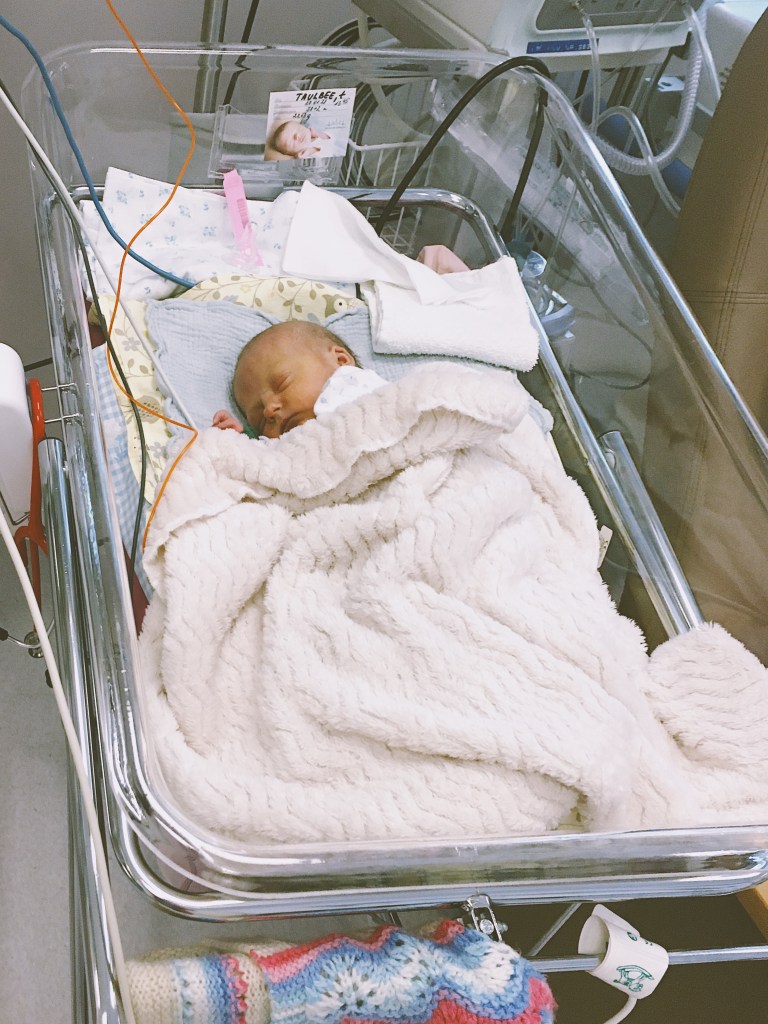
And, before I knew it, I was weeping — she was alive. Our baby. She made it.
My scars began to sting as my stomach muscles worked to hold in my sobs. After all, crying when you have a giant cut through your abdomen isn’t particularly comfortable.
I tried to quiet myself down, not just to make sure our baby didn’t wake up, but because the pain was still a shock to my system. I made a mental note — make sure I take my paratcetamol when I go down to my room. I think I’d forgotten it.
A flood of gratitude came over me again. Our baby was alive.
Almost immediately, a nurse came from somewhere, scolding me in Estonian, “She’s sleeping peacefully. Why are you messing with her?”
Like a kid who has just gotten caught with their hand in the cookie jar, my hands flew off my baby.
Don’t touch. I got it.
I had wanted to stay longer, but felt my stomach turn over in knots as that familiar feeling of shame washed over me. Quickly, I made the decision to go back down stairs to my room. I was already messing up motherhood.
How?
By touching my baby, apparently.
This hospital stay was not going to be easy.
8:00 a.m. | NICU
A few hours later, stomach full of a hearty breakfast, I sat silently next to Eloise’s crib, feeling invisible.
Nurses hurried past me in a rush to somewhere as I held this tiny little human in my arms, taking account of the two other babies in the same room. Silently wondering what they were “in” for.
I felt incompetent. The books I had struggled to read to prepare for her arrival had definitely not prepared me for this.
Imagined birth | January 2021
Eloise and I’s first meeting was going to be magical. Exhausting, but magical. I would be tired and overwhelmed from hours of labor and she would be wailing and covered in some white, gooey substance, angry with the world. Regardless of whether it was a vaginal birth or c-section, I didn’t care. I’d be awake to see her.
Then the midwife or attending physician would wait until her umbilical cord stopped pulsing to cut it, and then they’d gently lay her on my chest where she’d begin squirming her way to my breasts from instinct. In that moment, I’d lock eyes with Brian as we both cried from gratitude.
Then we’d all live happily ever after because we were the awesomest parents in the world and handled every normal kid challenge with class and wisdom.
The end.
Except, clearly, that’s not how it went.
Instead, here I was, sitting in this big, open space, feeling utterly by myself, wishing Brian was with me so we could navigate this together. Eloise had so many wires on her that I felt like I was holding a robot plugged into a switchboard rather than a baby. I listened to the beep of the machines go off around me and squinted from the brightness of the green-tinted flourescent lights blaring brightly from the ceiling.

I definitely didn’t feel like a mom.
Yesterday had been her birth, the day where I would magically turn into a mom. I would go from feeling like a 30-something-who-knew-nothing to a wise mother who had her stuff together.
But, instead, I just felt like a failure.
After all, that was the only thing that made sense to my irrational, postpartum-hormone-filled brain — why else would strangers whisk my baby away, not let me see her for 7 hours (and then only for a few minutes), and send my husband away without ever getting to hold her?
It must have been because they didn’t feel we were good parents.
If my baby wasn’t with me in my room yet like all the other moms in my wing, it meant I needed to prove something to the staff. I needed to prove that I was good, that I was capable — that she would thrive in my care, just like all the other mums and their newborns staying in my ward.
That was the only way I could get my baby.
9:30 a.m. | NICU
Other than her heartrate, I couldn’t make sense of the rest of the numbers changing on the screen next to her bed. I made a mental note to ask someone, if someone ever spoke with me.
When a friendly, older Russian nurse finally came around and noticed me sitting there, looking lost. She was bubbly and upbeat. She spoke slowly and clearly, seemingly recognizing that my foreign, halting Estonian needed a little extra help to understand and be understood. I immediately liked her.
She grabbed a syringe and began to explain the “How to”s.
- How to feed my baby. (Keep her in the crib. Use my forefinger and a syringe after I first washed, disinfected, and put on a set of rubber gloves. But ONLY the amount set by the doctors on call that day. And ONLY every 2.5 hours. No feeding too much.)
- How to diaper change my baby. (With tiny little pampers at her bedside table. A few days later, I’d also learn how to weigh her diaper so the nurses could record “what came out”.)
- How to wash my baby’s umbilical cord. (With a long q-tip and distilled water. Rinsing twice.)
- How to clean my baby. (With a set of cotton gauze pads and the water, but just on the eyes and ears.)
- How to burp my baby. (Lean her forward slightly.)
- How to put my baby to sleep. (On her side, under a heap of blankets, switching the side I lay her on each time.)
- How to keep my baby on the schedule. (She eats every 2.5 hours so my job is to come here to feed her, then I go back down to my room to pump and then bring back whatever colostrum I’ve got, to be added to the donor milk they’re feeding her.)
Right. This was concrete. This was do-able. I could follow these rules. I could measure my success. They’d soon see that I was the model example of a NICU mom and would be so impressed I followed the rules so well that they’d let us go early.
After the nurse was done showing me the ropes, I gingerly asked her if Eloise and I could try breastfeeding. I was feeling that longing to somehow re-create, as best as I could, the birth experience we never had.
I saw her bubbly expression turn to somewhat of a frown. “Mmmm… Maybe tomorrow.”
10:00 | My hospital room
I was lying in bed, trying to get some sort of nap in when I heart a knock at my door. “Tulge sisse.” I called out. Come in.
A tall, thin, middle-aged blonde nurse entered, holding a heavy yellow plastic thing the size of a purse.
She came over to my bed, showed me a few buttons and explained this was a pump. I was to pump first one breast, and then the other for 10-15 minutes each every 2 to 2.5 hours, then bring my milk with me upstairs when I went to feed my baby.
Then she left.
I looked at the strange contraption on my nightstand and sighed. Hopefully this would just be temporary. I strapped it on and gave it a try.
Mid-morning | NICU
Eloise was sleeping peacefully in my arms while the baby with the louder mom screamed a few meters away. My baby, on the other hand, was a model of calm and quiet.
I watched her heartrate on the monitor, listening to the machine beep, beep, beep as the little lines went up and down. Every time someone spoke, a machine went off, or a baby cried, her heartrate went up. When the noise stopped, her heartrate went back down. When I put her in the crib, it went up again. When I held her in my arms, it went down again.
She liked quiet. And she liked me. This seemed to be a good sign.
Since I wasn’t allowed to bring my cellphone into this room with far more machines than babies, I made a mental note to google “good heartrate for newborn” when I went back down to my room to eat. I needed to make sure Eloise (and I) were exceeding expectations.
Because the competition had already begun.
Early afternoon | My hospital room
“Happy birthday, Mal!” “Mal, hope you’re feeling great on your birthday!” “Mal, what a great birthday gift you got yesterday!” “We love you, happy birthday!”
I’d come back to my room with a flurry of Whatsapp messages from our family in the States who had just woken up.
Right. It was my birthday.
I should have been overjoyed, basking in my new motherhood. Instead, I just felt alone. Like a shell of my former self.
I wished Brian was there. Stupid COVID. Couldn’t we just pay to get him tested, prove he was COVID negative, and then he could join me? Apparently no.
I sat down at the tiny table in my hospital room, where my cold lunch was waiting for me. As I began to eat, I found tears streaming down my face.
“This will all be over soon. You all won’t be in the hospital for forever.” I reminded myself.
It didn’t make me feel any better.
Late afternoon | NICU
A middle-aged woman with short brown hair seemed to be giving a tour of the babies to a woman in a white coat, explaining their problems, one-by-one.
It was our turn.
“Enneseaegselt. Oi. Vabandust. Ei ole enneseaegselt. / Premature. Whoops, sorry actually, no, she’s not premature.” she said with some surprise.
Then, a look of pity came over her face as she began pointing out Eloise’s fingers and toes with problems, mentioning the geneticist would see us on Tuesday. As she explained that all of Eloise’s vitals were fine, her voice shifted to one of almost admiration.
I felt myself puff up with pride. That’s right. She was amazing.
Then, when she started pointed out to the doctor in the white coat all of Eloise’s “facial anomalies” I couldn’t help myself. I interrupted.
“Tegelikult, tema nägu sarnaneb täpselt nagu teme issi perega.” I showed them some photos on my phone of some women in Brian’s family — she looked just like them. The brown-haired woman glanced at me with pity and nodded.
Quickly, she and the white coat woman moved on.
Why were we in the NICU anyway? Eloise seemed like she was doing pretty great, the brown-haired lady said so herself — she’d only mentioned her fingers and toes and facial anomalies, and that’s not a reason to keep a kid in the NICU.
No matter, tomorrow we’d probably be out.
Evening | My hospital room, phone conversation with Brian
“It’s weird. I’m taking care of this tiny human like they taught me to all day, but I don’t feel connected with her. She feels other-than, alien somehow. It’s like I didn’t just birth a child. It’s more like I’m exhausted and I’ve been given a task and I keep doing it because I don’t know what else to do.”
“I wouldn’t worry about that. In time, you’ll feel connected with her.” Brian soothingly responded, my pump whirring in the background.
“I’m not sure about that, Brian. Maybe I’m just not mom material.”
“You are totally mom material. Besides, didn’t the doctor yesterday say there’s a chance you all can get out of NICU tomorrow?”
Day 3: Sunday, January 31
Morning | NICU
The nurse yesterday had said maybe I could try breastfeeding her today. I was so nervous. Before Eloise was born, other than worrying she might not make it, I was worried about two things.
- That she’d be autistic (I’d read somewhere on the internet that kids born under 2kg had a much higher chance of autism)
- That we wouldn’t be able to breastfeed
Today the friendly Russian nurse was gone, replaced by an early 30s Estonian who was tall and blonde — like they all were. But, more importantly, she spoke English.
I felt some relief. Maybe, just maybe, today would feel a little easier since I could converse in my mother tongue.
By that morning, I felt like an old hat at taking care of Eloise according to the NICU rules — because she’d had so many feedings yesterday I’d gotten in plenty of practice. This young nurse would be so impressed I knew what I was doing.
- Wash my hands.
- Disinfect my hands.
- Get a glove (size medium).
- Grab the waiting syringe, stick my finger in her mouth, and let her suck while gently pushing the plunger.
Boom.
I began.
“Whoa whoa whoa! It’s important she does it herself. Don’t force her to eat,” the young nurse was suddenly at my side, a note of strong alarm in her voice.
That wasn’t the reaction I had been expecting.
“I’m not! She’s doing it herself.”
The lie had slipped out. Why did I do that? It was true, I had been pushing the plunger a little, but wasn’t I supposed to? Wasn’t this what the Russian nurse had shown me yesterday? Wasn’t I supposed to help Eloise out a little? Or did I misunderstand her?
I stopped pushing the plunger and let Eloise suck.
On cue, she began inhaling vigorously.
As Eloise had nearly finished the pre-filled syringe, I got excited again. Another opportunity to shine.
I took the tiny red medicine cup on the table next to her crib and proudly began to extract my freshly pumped colostrum into the syringe, just like the Russian nurse showed me yesterday — I was now going to be feeding her with my milk. This milk I’d worked so hard for.
As I turned to start feeding Eloise again, I heard the nurse’s voice and, intuitively, I winced.
“Whoa whoa whoa! You don’t want to overfeed her and make her sick!” She was at my side again.
I was being scolded a second time and I’d been there just 10 minutes.
“I’m not overfeeding her! She wanted it!” I exclaimed, trying to seem calm and like I knew what I was doing. I mean, I did know what I was doing, didn’t I?
But, wait, was the nurse right? Was I forcing her to overeat? Had Eloise shown any indication she wanted to eat? I wasn’t sure — this was my first baby. Maybe the nurse knew what she was talking about.
But, hey wait a minute. Why was I in trouble? Didn’t the Russian nurse yesterday mix the syringe of milk with the colostrum I’d brought up? Wasn’t that what I was supposed to do?
I thought I was following the rules.
My heart sunk and my stomach tied itself in knots. So much for having a better day today.
Casually, as I finished up the syringe she had reluctantly let me feed Eloise the extra milk that had my colostrum in it, I tried to seem calm and collected. “So, they said yesterday we could try breastfeeding today. When do you think we could do that?”
The nurse paused for a moment, consulted a gigantic, pencil mark-filled ledger that the staff seemed to gravitate towards all day.
“Let’s try at her next feeding.”
I burped Eloise, waited until she magically fell asleep under the bright lights and continual noise of the NICU, and went back to my room for lunch.
It was hakkliha kaste and kartulipuree. My second favorite Estonian dish (behind kukeseened, hapukoor, sibulad, ja kartulid).

At least something was going well.
Afternoon | NICU
“Ah, you’re here! I’ll go get the scale.” said the young nurse when I arrived.
Before I knew it, the privacy divider was wheeled over to our area shield me from the rest of the room. Once Eloise was carefully weighed, the blonde nurse placed Eloise at my breast, giving me a quick summary of the correct position for breastfeeding. Then left.
I took a deep breath and I felt some of my tension drain. This was the moment I’d been waiting for and imagining for months.
Now. Now I would feel like a real mom.
I waited for Eloise’s primordial instincts to kick in.
And waited.
And waited.

But there she was, nose snuggled into my flesh. Content, and doing absolutely nothing. I started panicking. Was it possible that Eloise didn’t seem to have the natural instinct I’d heard all about, that babies just latch without any prompting?
The young nurse saw the fear in my eyes and intervened, adjusting Eloise to a better position. Then she gave us a few more tips, and declared in a syrupy sweet voice, “I’ll give you guys some time” and walked away.
I couldn’t tell if I felt relief that we were left alone again or anxiety that maybe nothing was going to happen.
So there I sat, people rushing around us, under the bright lights with my tiny little baby at my breast. She continued doing nothing. Was I supposed to do something? I wracked my brain for any of the advice I’d scanned through in parenting books and remembered I read somewhere that stroking her cheek would elicit a sucking reflex. So I tried that.
“Oh! Don’t do that! She will automatically suck when you do that, it’s important she finds it herself.”
I winced. The nurse was back — I hadn’t realized she was watching us. I stopped stroking Eloise’s cheek and just sat there awkwardly. Wondering if there were any more rules I was breaking.
Amazingly, though, after a few minutes, Eloise actually started nibbling. Relief flooded my body — maybe we were going to make it after all.
Suddenly, the blonde nurse was leaning over us.
“Oh you’re gonna wanna stop that, she’ll destroy your nipples that way. That’s what happened with my first.”
Inwardly, I shrank again. Here I was, messing it up. Again.
The nurse walked away and I silently prayed that Eloise would suddenly get it. We sat there for awhile, Eloise content to nuzzle my breast and do nothing. At least she was comforted, that seemed like a good first sign. I tried not to feel angry that Eloise had been eating from artificial means for 2 days already, and that might have interfered with her ability to nurse.
I took some deep breaths and re-focused. We were going to get the hang of it, just you wait.
After awhile, the nurse came over, an alarmed look on her face. “Look, I wanted to give you all time but it’s been 10 minutes. I’m sorry, but we have to get her eating — we can’t mess up her schedule.”
The books had said give the baby a few hours at birth, 10 minutes wasn’t even close to that. Disappointedly, I nodded. I’d have to let her have that time when we finally got out of that place.
As the nurse handed me the pre-filled, pre-warmed syringe, she added, “Oh. And you know, before you think about having any other kids, you and your husband are definitely going to want to get genetic tests. To make sure you aren’t carriers of… you know.”
I looked at my content little baby with olive-yellow skin, bent pointer fingers, and fused toes.
I knew what she meant. Our baby was defective. We needed to make sure not to make any more just like her — it would be irresponsible otherwise.
Day 4
Monday, Daytime | NICU
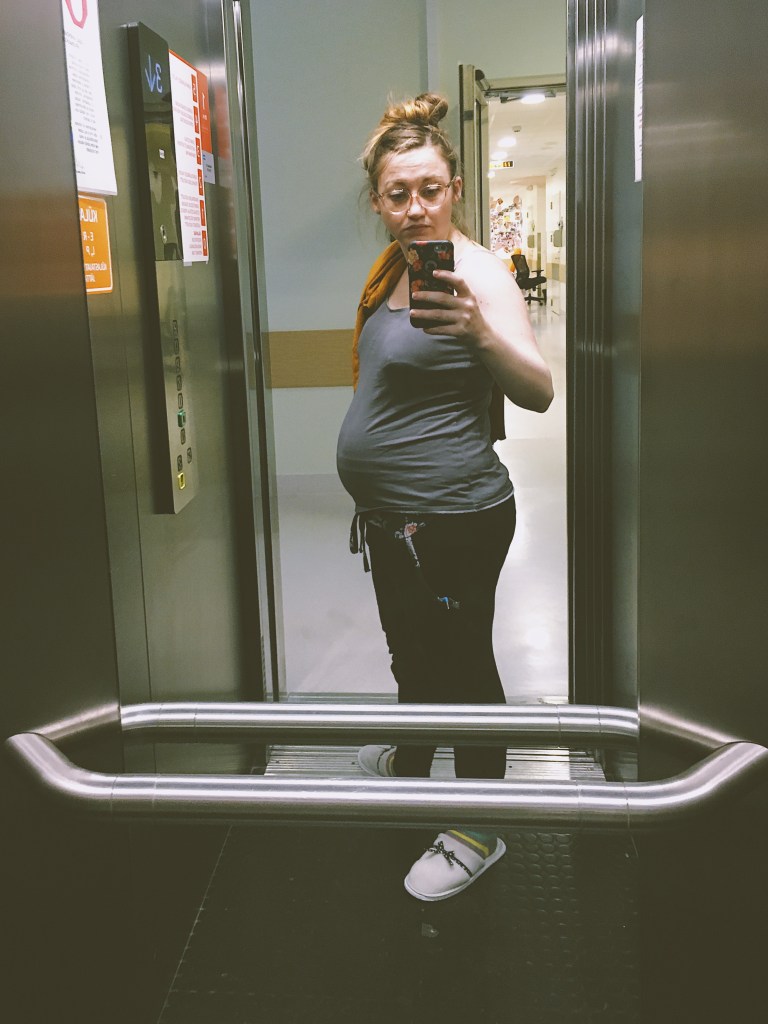
There were three of us in there by then. Three moms. Three babies. Three schedules that overlapped as we changed our babies, fed them in the manner prescribed by the doctors, rocked and soothed them to sleep, then went back down to our rooms to pump and eat the hospital food and then repeat the cycle all over again.
In Estonia, people don’t make small talk. Everyone has mutually agreed that the best way to proceed in society is to ignore one another.
So I pretended they weren’t there and they did the same favor for me.
I so wanted out of that room where my baby was under bright lights and constant noise, being simultaneously ignored yet intently monitored. Didn’t that doctor say on the first night that maybe we could get out of NICU on Sunday or Monday?
Maybe today was the day she’d come home with me.
My logic said if I could somehow prove that Eloise and I were in better position than these other two moms and their babies, then the doctors would let us leave.
That’s how I started our silent competition.
Competitor 1: Minnie Mouse PJs mom
- Pumping She was coming upstairs not one but two 80ml bottles of pumped milk. Whereas for me it was day 3 and I was lucky to be pumping 30 ml total. (She wins. 1 point for her)
- Term When she wasn’t there, I casually walked past her baby’s crib and noticed he was born in the early 30s weeks — pre-term. Eloise was born at 38+3 — full term. (We win. 1 point for us!)
- Presence I was there any moment I wasn’t pumping or eating, but she seemed to be the same way. I couldn’t outperform her there, darn. (A tie, so 1 point to both of us.)
- Breathing Her baby was on oxygen, but Eloise had been breathing room air since the start. (We win. A point for us.)
- Staff friendships One of the nurses constantly spoke with the mum in Russian in such a friendly tone. She must be doing something right because no one was speaking with me. (She wins. 1 point to her.)
- Birthweight I noticed her baby’s birth weight. Something over 3 kg while tiny Eloise was born at 2.253kg. (They win. 1 point to them.)
Minnie Mouse PJs Mom: 4 points <—–> Us: 3 points
This was not looking good.
Competitor 2: Loud floral shirt mom
- Eating For whatever reason, feeding time for she and her baby normally consisted of her pouring milk into some long tube. That couldn’t be a good sign. Eloise was eating via syringe or bottle nipple with no problem. (We win! 1 point for us.)
- Volume More than once I overheard the staff reminding her to be quiet because there were other babies in the room. I felt a small sense of satisfaction. I was a model of quietness. (We win. 1 point for us.)
- Breastfeeding Quite often, the staff would wheel over a privacy divider to their spot. At which point she’d pull up her shirt and seemingly breastfeed her baby with such ease. The few times I’d tried up until that point, Eloise would just cry in confusion. (This was a big win for her — 2 points.)
- Crying Her baby cried so often it was hard to remember what silence sounded like. She must be doing something wrong. Eloise, on the other hand, was a model of calm. Which meant I must be doing something right. (We win. 1 point for us.)
Loud floral shirt mom: 2 points <—–> Us: 3 points
Okay, so we beat out loud floral shirt mom, so maybe there was hope.
We just had to wait for the NICU staff to notice how much better we were doing than floral mom, at least, and send us away.
Right?
Spoiler alert: Eloise didn’t graduate from NICU that day.
Oh, and in case you were wondering you didn’t miss chapter 1. Because I haven’t written it yet.
It just so happened chapter 2 called me to write it out first. So that’s where I’ve started. The other chapters will write themselves when the time is right. At least, I hope so.
Hugs from the three of us,
Mallory, Brian, and baby Eloise

 Eloise The Tiny Fighter
I remember allllll of this!!! I had to laugh at the point system! ❤️
LikeLike
I sure hope you didn’t do the same in your head.
LikeLike
Thank you for sharing!
LikeLike