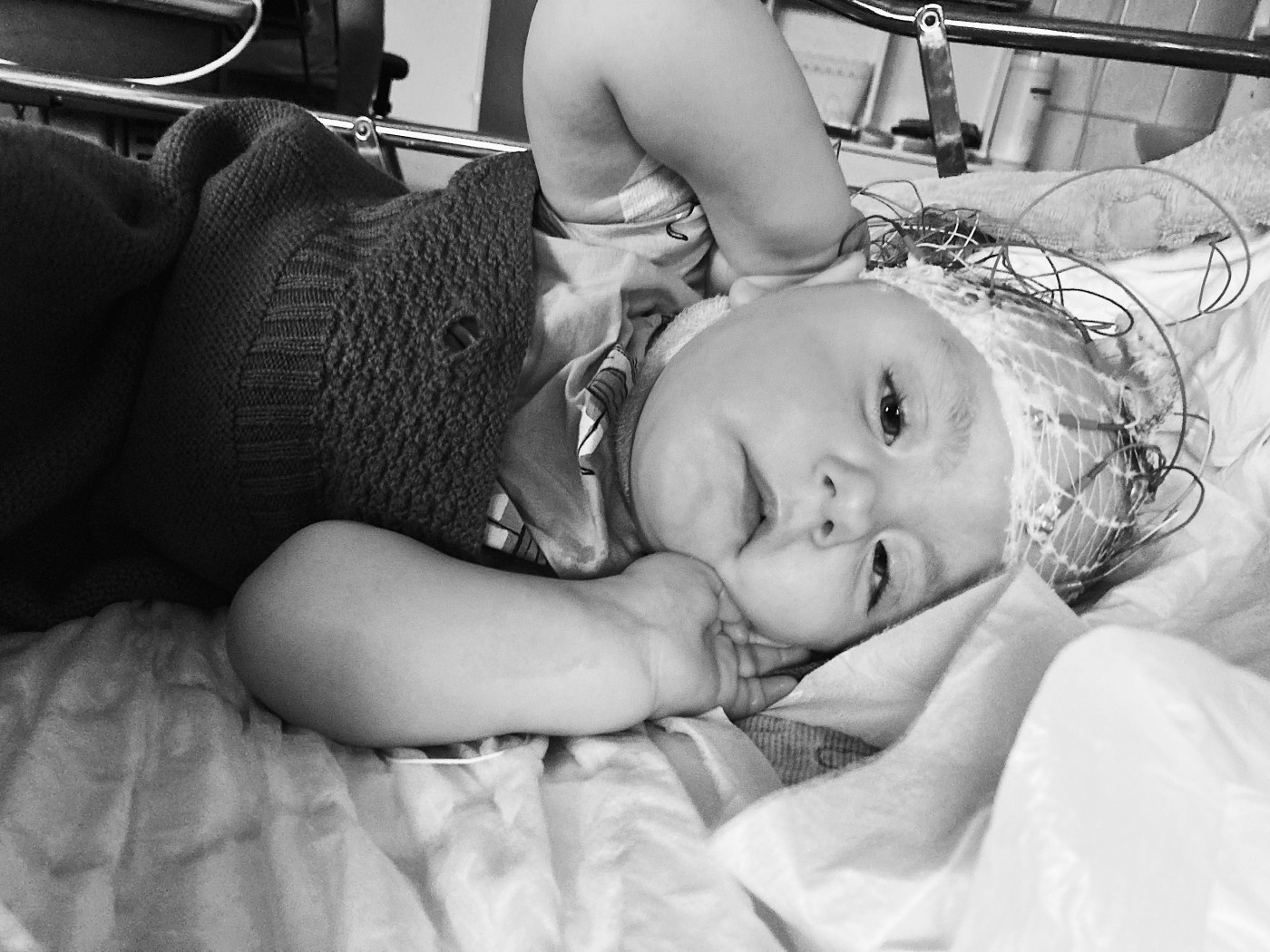
We returned last night from our planned Tartu inpatient hospital stay.
So. 👏 Much. 👏 Good. 👏 News. 👏
There’s no way to easily explain it all in an instagram story or a tiny facebook post, so blogpost here we go!
The feel of Tartu vs Tallinn
In Tallinn Lastehaigla (Children’s hospital), we’ve had two emergency hospital stays, several outpatient day trips, and seen countless doctors and specialists for nearly a year now. After so many interactions, the overall feeling I’ve come away with from that place has been, “Why are you still talking? You’re bothering me — go away.”
Thankfully, not everyone has given us that feeling. There have truly been bright spots — a specialist here or there that has been empathetic and present and cared. But, overall, if I judge the hospital by the nursing staff and the fact that the doctors have dismissed our questions and concerns almost every single time we had one — without seeming to try to understand nor help — then that sentence does accurately describe my feelings about the place. It has felt like not only do they not want to listen, but that they have little to no interest in helping her.
Conversation after conversation replays in my mind.
Reflux
“Eloise has bad reflux that sends her into pain episodes that cause her to cry from pain for hours and hours every day. Is there anything we can do?”
“A lot of babies have reflux and cry a lot. She’ll grow out of it.”
Feeding difficulties
“Feeding Eloise takes a long time. Can you watch how we feed her and maybe give us feedback on what we might be doing wrong or what we could do to make it go faster?”
“Maybe you should consider just getting a feeding tube.”
Food intolerances
“Since she’s on breastmilk (which is really important to us because it helps build brain matter), my diet makes a huge difference in Eloise’s pain levels. I’ve seen over and over again that if I eat certain foods her pain gets worse, but if I stop eating a certain food, her pain gets better. Unfortunately though we have been taking detailed records and it seems she had been reacting to very many foods. We are worried. Can you help us figure out maybe a diet that would reduce her pain?”
“There’s no way a child has that many food intolerances. Switch to formula.”
Preventing seizures
“I understand Eloise’s SCN1A gene may be effected. If that is the case, then likely seizure activity would already show up on an EEG. Can we meet with a neurologist and check her so that, if there is seizure activity, we can proactively get her on medication before seizures start?”
“She’s too young to see a neurologist yet. Wait until she has seizures and then we will talk.”
Preventing MORE seizures
“Okay, Eloise had a seizure. Can we see a neurologist?”
“Wait until it’s a really long one, then call the ambulance and we’ll deal with it then.”
Treating her seizures accurately
“I looked up Eloise’s genetic deletion markers and it includes the gene SCN1A. Seizures associated with that gene need to have different treatment than usual. Could you consider inspecting her for Dravet Syndrome?”
“There’s no way she has Dravet. If she was missing SCN1A it would be in the genetic notes. Her seizures are just due to her deletion.”
Taking her seizures seriously
“Okay, so the geneticist updated the notes to point out that Eloise IS missing part of SCN1A. Can we now take that into consideration?”
“It would be lovely if we could control her seizures, but with SCN1A that is just not going to be reality.”
Strengthening her immune system to prevent more seizures
“Kids like Eloise often have really weakened immune system problems that often send them to the hospital, at least during non-COVID times. Because of that, we’ve been making sure to limit her contact with the outside world. We also know she’s missing a gene that is associated with immunodeficiency and it can be tested for with a simple blood test. Is there a possibility we can test her for that? Because we have already seen that viruses and fevers are more likely to trigger seizures. And, of course, with each of these bad seizures comes a chance of brain damage or death.”
“We don’t test for that immune system problems until the child has had many infections.”
Muscle weakness to help her development
“Hello neurologist. Eloise has nearly all the symptoms of a neurological muscle weakness disorder included in her deleted genes that another child with her deletion has already been diagnosed with and successfully treated for with just one medicine — it made a huge difference in his development. I can also get you in touch with that doctor who diagnosed it. Can you check her for it?”
“That sounds like you have genetic questions. Why don’t we just have you talk to a geneticist.”
These snippets play over and over in my head, like a child reliving trauma. Wondering if the problem is us or if there’s just a problem.
But Tartu children’s hospital this week? It was a whole different story.

Brian looked at me the first night we were there and said, “The impression I’d gotten from you is that nursing staff is generally frustrated and annoyed at you all the time in the hospital. But I haven’t felt this way at all.”
I looked at him and laughed, “That’s because the nursing staff here hasn’t been frustrated and annoyed at us all the time. This is a whole new experience!”
I won’t bore you with the small details of our Tartu children’s hospital experience, but there were two questions each doctor and specialist asked us:
- “Why have you come — how can we help?”
- “Do you have any questions for us?”
It wasn’t until we were in the car on our way home that it hit me how powerful this was. We’ve tried so hard to bring up our concerns over the last year in Tallinn and felt dismissed over and over again. So to have doctors proactively ask how they could help us, and, then if we had any questions — Brian and I were blown away. Until now, it feels like we’ve never really had the space to bring up our concerns and be taken seriously.
At some point I said to the geneticist, “Tell me what I can do to help make your life easier — I know you are very busy and have many patients. So I can contact people or do some initial research if needed.”
She just blinked at me and kindly said, “No, you don’t need to do anything. It is my job to help you.”
I almost cried.
Maybe it’s because Tallinn children’s hospital is servicing 1/3 of the country’s population and that’s why it makes it so hard for them to have any mental space to properly listen to parents. I hope it’s just that.
But, regardless, both Brian and I’s hearts went through a little healing feeling heard in Tartu.
So grateful.
MRI results
One thing they do in Tartu when they take on a new neurological patient is to do an MRI — an MRI makes a detailed image scan of the brain while the patient is completely still.
A few days after Eloise was born, they found large cysts/lesions on her brain via ultrasound. A doctor then told me that in her entire career she had never seen lesions so large on a newborn’s brain — so they did a followup MRI that same week which didn’t give them anymore answers. Then, once Eloise was diagnosed with the genetic deletion a month later, the geneticist ordered another ultrasound done — which showed some had grown and some had shrunk.
And then doctors in Tallinn never mentioned it again.
Later, as I began networking with other parents that had kids like Eloise, I learned something I didn’t see mentioned in any research. I spoke with the only 4 parents whose children I could find had deletions that extended all three bands from 2q24.3 through 2q32.1. All four of them said that their child, too, had had abnormal stuff show up on their kids’ brains at birth. Back then, it comforted me. This was “normal” in Eloise’s deletion world.
But when the young neurologist in Tartu asked aloud, “I wonder why Tallinn didn’t do another MRI to follow up afterwards?” I thought it was a good question.
The doctors in Tallinn had no idea that these lesions were normal for Eloise’s deletion (they never gave us space to tell them that and it feels unlikely they would have listened if we did). I’m no doctor, but the brain seems pretty important. So wouldn’t they have wanted to check at least at some point if things had gotten better or worse?
I decided maybe the fact that her brain had had lesions had gotten lost somewhere in the pages of notes of her medical history. That would make sense — maybe that’s why they never checked again. But I looked into Eloise’s medical files last night when we returned home. The most recent notes from her latest doctor listed Eloise’s case history. And there, in the second paragraph, was the mention of these cysts on her brain. For reasons unknown to us, though they knew about it, Tallinn just never checked on her brain again.
But back to the MRI.
Sweet Eloise got super sleepy after the medicine. But the results came back.
No more cysts and lesions! Everything that was there when she was first born was all gone!
This was great news!
But. Isn’t there always a but with Eloise?
There was some not as encouraging news, too.
Her lateral ventricles are larger than they were a year ago.
What does that mean? Essentially, what we understood is that there may be more fluid there than is good for her. And that extra fluid builds up pressure that might have caused — or is causing or will cause — brain damage. The doctor was still waiting for the opinion of the neuroradiologist.
But the problem has a plan
I think most parents if they got the news that their child’s brain shows signs that it may have been damaged would do a lot of grieving.
Totally understandable.
But Brian and I realized we weren’t worried at all.
Why? Because, for the first time in a long time, the doctor had a plan. We will do another MRI around May and check to see if they have grown or shrunk. Then they can decide what to do. For example, we have an option to try to drain some of that fluid to decrease the pressure which might help.
Maybe that sounds scary, but to us that sounds like hope.
Eloise has a problem that the doctors proactively found (we didn’t notice it first). The doctors have decided to take the responsibility to monitor it to make sure it doesn’t impact her. And they have a plan of what to do if it gets worse.
Wow.
Maybe that sounds simple to you — like bare minimum care — but to us, it’s huge. We didn’t have to find this problem. We didn’t have to suggest testing. We didn’t have to remind the doctors that it’s important. We didn’t have to nag them to check again or do something about it.
It filled us with so much hope.
EEG results
I saved the best for last.
First off, in case you are lucky enough to not know what one is, an EEG is a test where they connect little wires to someone’s head and measure their brain waves and patterns to see if there is any epileptic or unusual activity.
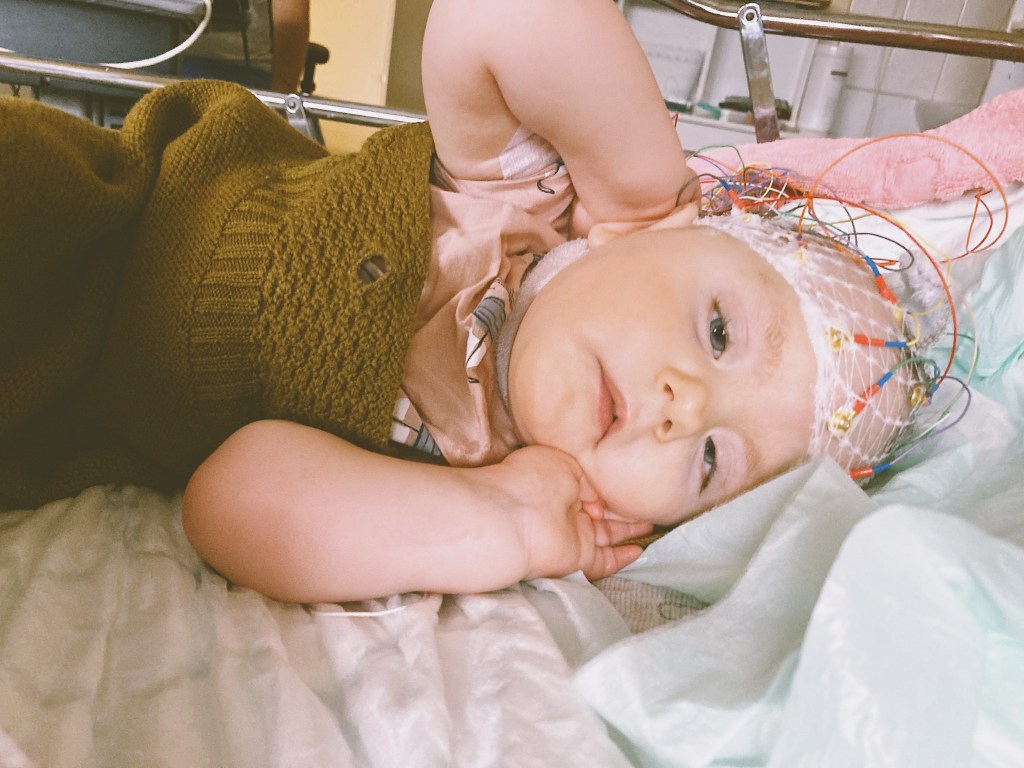
I’ve spent a lot of time reaching out to other parents with kids like Eloise — either those who have large deletions like hers, or those who are missing important genes that are associated with severe epilepsy.
Before Eloise’s big seizure happened in November, from my small sample size of parents and kids I knew of, I had begun to notice what seemed to be a pattern that put kids into three general groups in regards to seizures.
- Group 1. First seizures normally start before 4 months, often coming with the fevers triggered by vaccines. EEGs taken before the first seizure show do seizure activity. EEGs taken after the first seizure also show seizure activity. These kids battle seizures for the rest of their life — medication never fully controls them.
- Group 2. First seizure normally happens somewhere between 1.5-3 years old. EEGs taken before the first seizure don’t show seizure activity. EEGs taken after the first seizure also don’t show seizure activity. These kids are put on Keppra and don’t have another seizure again. Until maybe puberty.
- Group 3. By age 6 or 7 still no seizures. Parents hold their breath until puberty, when they know it’s possible seizures may show up.
By the time Eloise was five months old, I was feeling a lot of relief. She’d passed the 4 month mark with no seizures. The kids who had the larger deletions all fell into group 2, so I felt confident that is where Eloise would fall, too.
So when we went to the hospital in November with her bad seizure, at age 9 months, I was only a little concerned. Sure, the other kids like her, those in group 2, had their first seizure well past 18 months. But all kids are different, right? I knew the doctors would give her an EEG and discover no seizure activity — just like the other group 2 kids. They’d then prescribe her Keppra and we’d go home and never have to deal with another seizure for a long, long time.
Which is why I was shocked in November when that EEG did show seizure activity — when she wasn’t having a seizure. Our world came crashing down.
An EEG showing seizure activity meant she was likely going to fit into group 1, where kids battled with medication-resistant seizures their entire lives. When she kept having seizures after she came home, on the medication that had successfully treated group 2 kids, it began to sink in that, indeed, her future might be with those in group 1. Seizures would be with us for life.
Then December came. That’s when I made the connection that the kids in group 1 were all missing SCN1A — a gene associated with Dravet Syndrome which is very severe, treatment-resistant epilepsy. This confused me until, shortly thereafter, I realized Eloise actually was missing a big chunk of this important gene. No wonder she fell in group 1.
So Brian and I worked on accepting the reality that Eloise going to battle seizures all her life. And, along with that, each seizure brought the risk it might turn into a longer one that could lead to severe brain damage, regression, or death. On top of that, because of this one gene, her chances of dying by age 16 were anywhere from 10-30% depending on the study. We spent enough time talking to parents to know, if Eloise was on the milder end, then there was the hopeful chance of controlling her seizures enough to possibly keep her out of the hospital for the most part. But stop them completely wasn’t a thing we’d seen.
Which is why imagine our surprise when the doctor told us, “There wasn’t any noticeable seizure activity on Eloise’s EEG from Monday.”
Wait. Come again.
NO seizure activity?
As in… there was no seizure activity that entire 1.5 hours they monitored her?
Wait. What does that mean?
“Well, in my experience, I think that means Keppra is working. And we will keep her on that dose of 160mg.”
We were stunned. Her medication was working?
HER MEDICATION WAS WORKING! That seems to be the most likely explanation of why her EEG was free of seizure activity and why January 31st was her last noticeable seizure. Becuase that’s the first day she got a higher dosage of meds.
Our guts were wrong — this medication was making a difference after all.
A whole new horizon
Brian and I were literally in shock after we got the news. Total and utter shock.
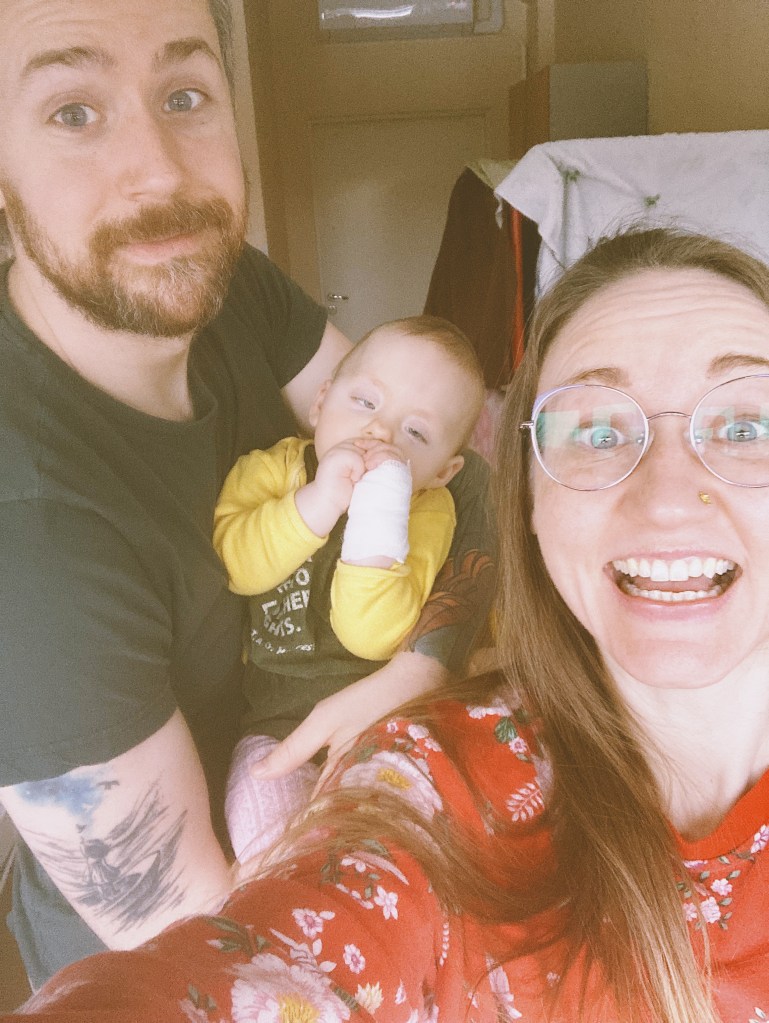
We’ve been trying not to get our hopes up too much. After all, all it means is that right now Eloise’s seizures are controlled. That doesn’t give us a promise that they will still be controllable in the future. But it gives us hope that maybe, just maybe, Eloise might fit into that group 2 after all. Seizures that can be controlled with medication.
We haven’t yet encountered a kid with this SCN1A deletion in which the first EEGs showed seizure activity but the later EEGs were clear and seizures were under control for the rest of their life. But, to be fair, that doesn’t mean these cases don’t exist. The reality is just that Eloise’s 2q24.3q32.1 deletion is so rare and the chromosome testing to spot it is so new that there just aren’t that many others we can look at like her to see what her future might look like. (Right now I have 4 kids who have her big deletion, and 4 different kids who are also missing the same 2 important genes and have seizures.)
As we tried to let our brains imagine a little — just a little — what life might be like with a seizure-free Eloise, we realized something.
Her entire first 13 months have felt like we’ve moved from crisis to crisis to crisis, never stopping to take a breath. Never being able to fully let down our guard to rest and really enjoy life. Never being able to imagine a future in which Eloise isn’t struggling heavily with something.
I know I know, before you tell me, I do realize that all parents face struggles the first year of life with their kids. That’s true. But I don’t think they usually have this many struggles to this extreme extent with so many overlapping at once.
Struggles with breastfeeding, struggles with feeding, struggles with painful reflux, struggles with extreme food intolerances, struggles with slow growth, struggles with teething, struggles with sensory issues, struggles with motor delays, struggles with mental delays, struggles with eyesight, struggles with seizures… it’s just been a never-ending stream of struggles.
To imagine a future in which we wouldn’t need to keep in mind how close a hospital is for her ER trips is just… almost unimagineable.
Yes, we remember that we have a long future of therapies ahead of her.
But, as Brian has often said, “If we didn’t know what parenting was supposed to be like, or what normal kids were supposed to be like, and all we knew was Eloise — especially Eloise who is NOT in pain — then we would absolutely choose this life. We would absolutely choose her. Because she is SUCH a delight.”
So true.
The redemption cherry on top
The hospital was empty enough on Monday morning that when I begged that they let Brian stay with me because Eloise was teething and screaming from pain often and I was pumping and we were happy to have him COVID tested and pay for everything ourselves and oh seriously please please please — they said yes.
My first long hospital stay when Eloise was born and they kicked Brian out was traumatic to say the least. The second one, her emergency rush to the hospital in November was at least better. But I was so anxious leading up to this planned hospital stay. An Eloise in pain can be very tough to handle.
I am especially thankful they agreed Brian could be with us, because this was the hospital stay in which Eloise struggled the most with pain. So we dealt with it together and that was much better than handling it alone. (Even if we did snap at each other that first night). It felt like some of my hospital trauma was redeemed and replaced by this stay.
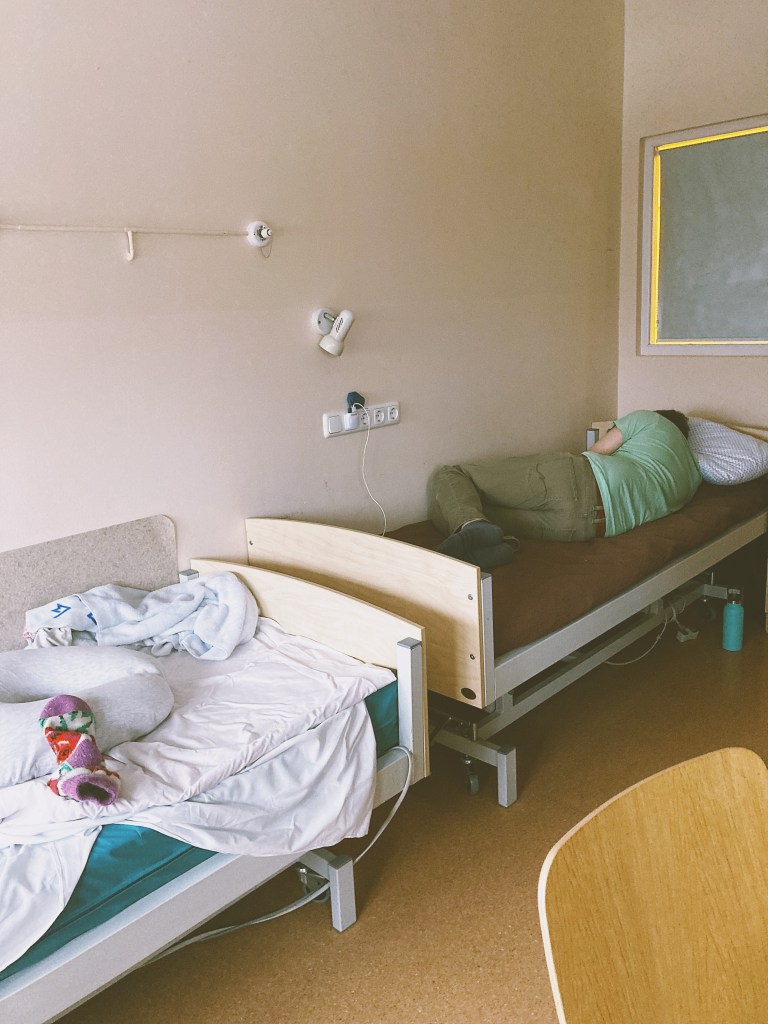
I feel so grateful.
So. That’s it. That’s the update.
It really all feels like a miracle, so we’re daring to allow ourselves some hope. Just a little, at least.
Thank you for all of your thoughts and prayers and for being on this journey with us.
All our love,
Mallory, Brian, and Eloise
 Eloise The Tiny Fighter
Your post filled my heart with joy! So happy hope is now part of your future knowing that at last you have found the medical support and care sweet Eloise, you, and Brian have been seeking. Sending love, hugs, and prayers!
LikeLike
Fantastic, awesome news!!! ❤️❤️❤️
LikeLike