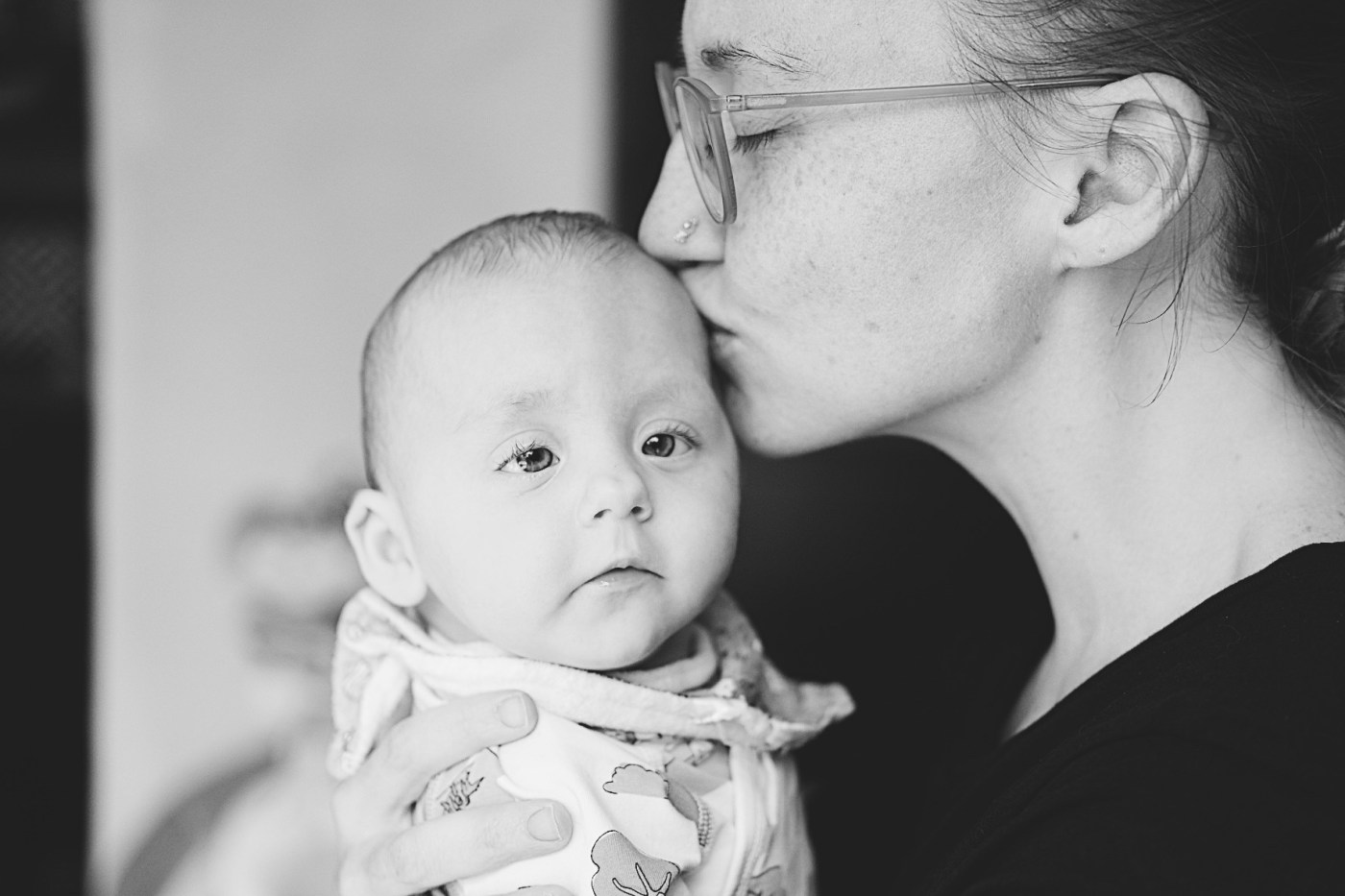
At least once each day, as Brian holds Eloise, he pauses and turns his full attention to me. Then, with his voice breaking from the emotion of it, he says, “I know our baby girl has so many problems, but I wouldn’t give this up. I would still choose this life with her even knowing how hard it would be. She’s just so precious to me. I love her so much.”
I look back at him and nod sadly. “I know you do, Brian, I know you do.”
But I can’t say it back with my whole heart.
I’m not there. Yet.
Hoping for kids
Only a few months into our marriage, we decided to leave the possibility of kids to fate. Like seemingly everyone under the sun, we assumed we’d get pregnant easily. But we didn’t.
Throughout the years, people would often ask why we didn’t just become foster parents.
My answer was often something like, “Raising a normal, healthy kid from birth is tough — and it’s something I currently have no experience with it. Foster kids often come with a ton of behavioral issues and deep emotional pain that deserve an incredible amount of extra care and love and parenting skills. So, to me, it doesn’t make sense to jump in to the deep end of parenting when we haven’t yet learned to swim in the shallow end of the pool. Maybe we can be foster parents someday — but I don’t think we’d be ready until after we’ve raised an ‘easy’ kid or two and have developed the skills needed for harder parenting challenges. Those kids deserve better.”
I already had enough emotional baggage of my own to sort through and often worried I’d mess up our “normal” kids. I didn’t think I could handle a kid that needed a lot more care than most.
Better together
Brian and I met when I was 16 and he was 15 at a summer camp. He told me then that I was going to be his wife. In response I told him to get a life — we were only going to be friends. Fortunately for me, Brian stubbornly refused to stop pursuing me over the years and, 7 years later, his prediction came true. I became his wife.
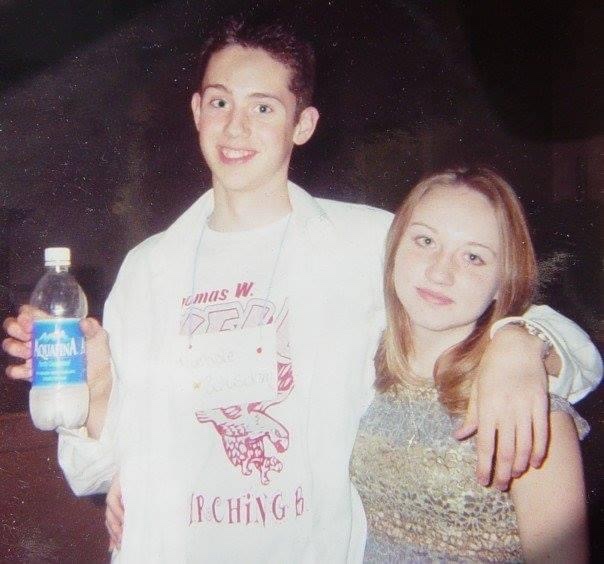
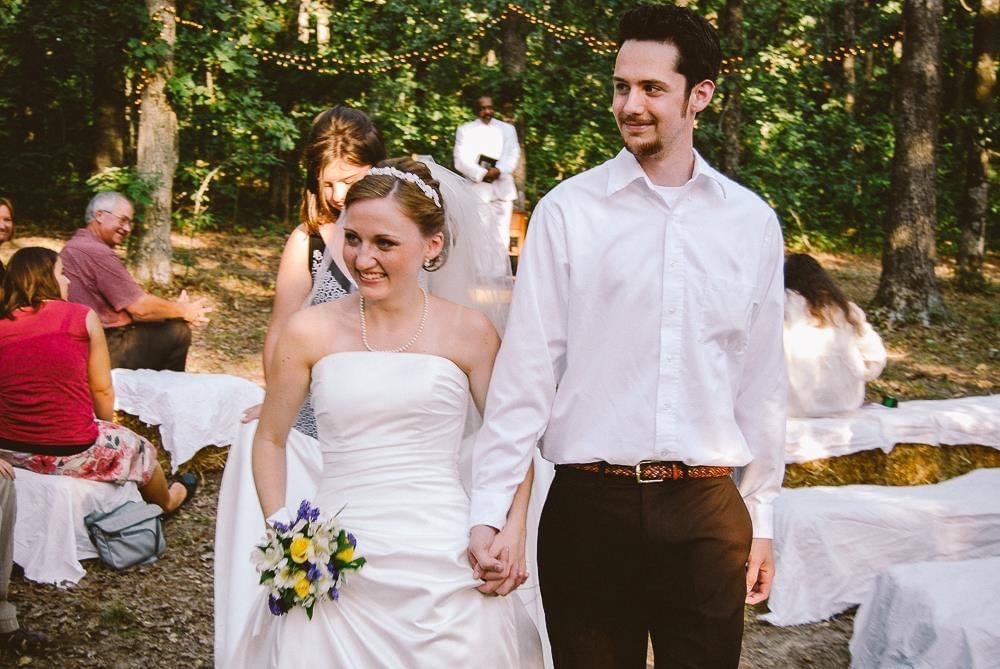
Our marriage, by and large, has been a really great one. Like, really really great. Not that hollow caption of “Gosh I’m lucky to have you” typed under a social media photo of the two of us that I chose to make me look way prettier than I do in real life. It’s the real deal. Yes, we still have problems and fights (90% of the time they stem from my issues, not his). But, by and large, Brian is so incredible that, to me, almost no one can compare. I want a partner like him for every person I love.
Years ago, though, we realized our relationship is happier and healthier if we have a project we’re working on together. Something where we can each bring our own strengths and complement the work the other is doing. Often, we’ve fulfilled that need by having jobs at the same place of employment — that’s been the case for 12 of our 14 years of marriage. On top of that, we’ve often done something else together. Like lead a Bible study in the States or volunteered as English teachers for internationals or hung out with teens that needed some adult friends.
However, as wonderful as working at the same place has been, 5 years ago we realized the best “project” we could work on together would be raising kids. We both wanted them, and the timing felt right to finally do something about it. Which is why we got some help from friends to start navigating the Estonian healthcare system to find the root problem of our infertility.
We thought it might be a quick fix. Maybe, after a few tests, they’d find that all we needed was a few pills or hormone treatments and then voila — baby!
But that’s not how it went.
Three years after we had begun really trying, we had a string of failed treatments and one heartbreaking miscarriage behind us. We were doing what we could to make children a reality, but there was only so much that was in our control. We weren’t sure we’d ever have kids.
So we bought a fixer-upper home and decided to make that our co-project, just in case none of those fertility treatments worked and we never had a baby.
Our life was still missing something
Fixing up our new (old) home was great. Brian has always loved building things, and I’ve always loved interior design. So our skills were the perfect complements to each other as we worked through each space in our house.


Yet, still, even with this perfect project that consumed so many of our nights and weekends after work, our lives felt a bit hollow and incomplete.
If we were living in the States, we’d probably try to fill that emptiness by finding a nearby place we could volunteer and spend quality time connecting with local youths, international students, or families in need. But, in Estonia, volunteering isn’t a huge thing. The few opportunities that exist are usually either with animal shelters or in places like soup kitchens where you don’t really interact with people. Anything more, anything that involves really connecting with people, generally requires Russian language skills — which we don’t have.
Something was still missing in our lives. No matter how we looked at things, we just kept coming back to the fact that what we really wanted, what we really thought would make our life complete would be a tiny little human we could love and raise together.
Finally, fertility treatments worked
To our shock and surprise, shortly after the first COVID-19 lockdown started in 2020, our 8th IVF transfer worked — we were pregnant with not one but two babies. We were not only over the moon excited, but absolutely terrified. We could lose them like we lost our first baby in 2018. Yet, amazingly, we made it through the first trimester — which meant our chances of losing them plunged dramatically.
But, then, we got hit with a scare.
At 13 weeks they thought our smaller baby (which I suspected was a girl) might have Down syndrome. They offered us a test for the 4 most common chromosome abnormalities with the possibility to “reduce” the pregnancy by ending her life if it turned out she did have one of the issues.
We decided to test, not so we could end her life if something was wrong, but to be mentally prepared if she had problems. In my eyes, as long as we had one “normal” baby, then having a disabled kiddo was absolutely okay. Great, even.
Early on after high school, I’d worked in multiple jobs with mentally disabled kids and adults and absolutely loved it. Down Syndrome children were my favorites. So I knew that having one child in our home with special needs would actually make our normal kid, and us, better humans because of it.
But, lucky for us, the test came back clean for both babies. No chromosome problems! We decided to pass over the amniocentisis which would have confirmed for sure that she didn’t have any genetic abnormalities. Why do more tests? We knew we’d love them both, regardless of if they had an issues or not. Besides, what were the odds something else was wrong?
Then, just a few weeks after that good news, we were shocked to learn that we we lost the larger, healthier looking baby — our boy — around week 18.
I’d thought we were in the clear. I’d thought they were both safe. I’d thought we were going to take home two healthy babies.
Our world stopped then.
We grieved our baby boy and the life we’d never have with him. We mourned the years we’d never watch him grow. We made peace with his loss and named him — Leonid, or Leo for short. It meant Lion-hearted.
And, within a few weeks of doing some pretty intense trauma counselling stuff and Brian getting a new tattoo, we were able to return to a place where we were fully emotionally present for our remaining baby girl. We knew she’d need our support, because she started measuring tinier and tinier and started worrying the doctors more and more as our pregnancy progressed.
That baby girl, as you might have guessed was Eloise.
Mourning the losses
With the first baby we lost in 2018, Ava, we were able to neatly imagine and then grieve the life we’d never have with her. Because she was gone and we’d never hold her.
With Eloise’s twin brother, Leonid, we were able to do the same. We could cry and mourn and imagine his life that would never be and hold each other and accept the fact that he’d never be ours to raise on earth.
Eloise, on the other hand, made it. Sure, with COVID restrictions and a short stay in NICU, we had a tough beginning, but Brian and I finally had our long-awaited baby.
Then, a little over a month after her birth, we learned the devastating news that she wasn’t okay. And never would be.
Eloise was missing 19 million lines of DNA and would be profoundly mentally disabled for life. If we were lucky, she would not have medication-resistant epilepsy and would be able to eventually walk (after many many years of physiotherapy). But she’d probably have a whole host of behavioral and health complications throughout her entire life. And would likely never speak or read or write. And would always need fulltime care.
Parenting Eloise in many ways has meant skipping the process of learning how to swim in the shallow end of the pool and, instead, diving right into the deep end where it feelsl ike we just might drown.
This was not the plan.
Between two worlds
I felt — and still sometimes feel — stuck.
I’ve had to let go of a majority of the dreams I had for Eloise because she wasn’t the baby we’d been expecting. She won’t be able to do much of what we’d planned for her.
So I haven’t been able to fully rejoice.
And, even though many of our dreams died with the reality of her diagnosis, we still actually had a baby that we will get to raise and love and cherish — which is what I wanted.
So I haven’t been able to fully grieve.
Our old lives
If I imagine life before Eloise came along, I remember mindlessly listening to podcasts, working in a job I enjoyed with great coworkers. I remember meal prepping and organizing and watching movies and shows and problem-solving the myriad of issues that come along with renovating a home — all things I enjoyed immensely. I remember connecting with colleagues through social media during COVID lockdown and restful, long walks in nature every day. I remember the ability to go visiting a friend at the drop of a hat and run errands all day long. I remember knowing nothing about the medical system in Estonia because I didn’t need it. I remember sleeping as long as I was able for as much as I was able. I remember having a husband who I deeply loved and appreciated and who, in turn, deeply loved and appreciated me.
I had a life that, really, so many would envy.
Yet, still, that life felt empty.
As much freedom as it contained, if I’m honest, I don’t want it back.
Yet, if you ask me, “Would you trade your old life with all its freedoms for this new one that’s so hard but has Eloise?”
I feel myself hesitate.
I can’t say yes.
I can’t say no.
I don’t know.
I’m not where Brian is yet.
Eloise, my love
When I look at Eloise, my heart fills with so much love it feels like it’s going to burst apart. When I hear her happy coos and shouts of delight, I melt. When I hold her in my arms I can confirm that it is literally the best feeling I’ve ever had in my entire life. When I watch Brian being the best dad in the whole world, I overflow with gratitude.
Yet, still.
Often life brings us to unexpected places
Many times in life stuff happens we wouldn’t choose. Bad stuff. Unexpected stuff. Weird stuff.
But then, after time passes, we realize that if we could go back and do things all over again, we’d choose the path we ended up on. Maybe because we love the outcome or maybe because we loved the process to get there, too.
Self pity
As Americans, we have a tendency to see ourselves as innocent sufferers — things are rarely our fault. Bad stuff is done to us and we cannot help the negative outcomes that resulted. Victims of circumstance, you might call us.
Or, as my social work teacher in University put it, persons who have an external locus of control — people who “believe that their successes or failures result from external factors beyond their control, such as luck, fate, circumstance, injustice, bias, or teachers who are unfair, prejudiced, or unskilled.”
I’m no exception here.
Most of the time these days, thankfully, (in part because Brian is now at home fulltime, too) I’m fine. I don’t compare Eloise with “normal” kids and it doesn’t hurt me to see “normal” babies. I’m happy for them. I love our little munchkin.
But, occasionally, I still get hit with feelings of jealousy.
I see a 2-month-old quickly gulping down a bottle of milk in minutes, or a 4-month-old almost sitting, or a 6 month-old nearly crawling, or an 8 month-old easily feeding themselves in their high chair. And, in that short instant, I grieve.
“Why me? Why us? Why can’t Eloise be okay?”
Usually, as quickly as those feelings come, they also go away.
It does me no good to compare her with other neurotypical kids. It does me no good to wonder if fertility treatments will allow us to have any more kids. It does me no good to wonder if Eloise will ever say “Mom.”
I push those thoughts away. I don’t know if that’s healthy (maybe I’m not dwelling on what I can’t control) or unhealthy (maybe I’m just avoiding stuff that makes me feel bad and never facing the truth).
On a journey to acceptance
I wrote something in Eloise’s birth announcement months ago that still feels true.
Once upon a time I’d dreamed of how we’d announce the birth of our long-awaited baby. And, I’ll be honest, this wasn’t how I’d imagined doing it. And on Good Friday, the day the world remembers the tragic, unfair death of Jesus, it seems fitting to finally announce our baby girl because, in some ways, her birth felt like the death of many of our dreams. On Good Friday, Jesus’ disciples were grieving the loss of their greatest teacher and friend — they could see nothing good about his death. To them, all hope died that day, the day he breathed his last breath on the cross.
But that’s just how it feels at times today.
As you probably already know, in the story, two days after Good Friday comes Resurrection Sunday. Easter. To Jesus’ disciples at the time, it was a total surprise. They weren’t expecting that only a few days after the worst day in their life, the best day would come. They weren’t expecting that Jesus would come back to life. Because after Jesus rose from the dead, the joy and hope of Resurrection Sunday far outshadowed the grief and despair of Good Friday.
And I think Eloise’s story will be like that. I think in many years she will be far more our Resurrection Sunday, and not so much our mournful Friday.
But as I write today, I still mourn. But with the hope that soon, maybe very soon, I’ll rejoice.
Not your normal birth announcement April 2, 2021
It feels true that there will be a point in time, hopefully in the near future, where I will not only fully and gladly trade my “old life” for this newer, harder one with Eloise. But that I will be deeply grateful with my whole heart.
I want to choose her, even knowing the hardships that come along with her.
A place in between

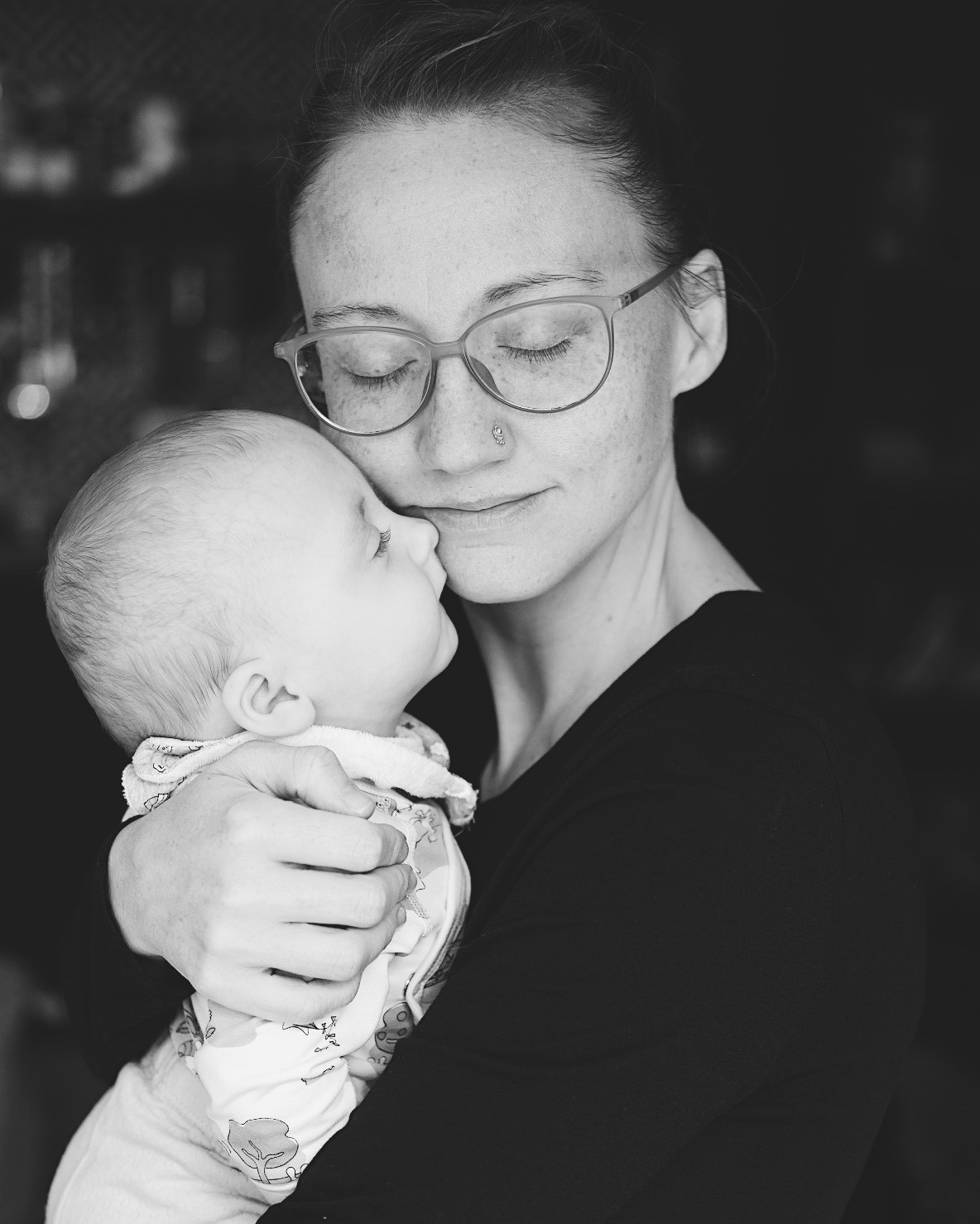
I once read in a smart book called Difficult Conversations that so much in life isn’t an either/or it’s a both/and.
So, for now, I will live in this strange land where both seemingly conflicting things are true.
1. I love Eloise deeply and feel an immense amount of appreciation that she is in my life.
And.
2. I’m not sure, having known what would come, that I can truly say I would have choosen this life with her.
Imagining a day where I can say “I would definitely choose Eloise.”
I know it will come — it’s only a matter of time.
I want to be a mom worthy of Eloise. Because she deserves it.
Mallory (imperfect human and mum)

 Eloise The Tiny Fighter
I still grieve…..will til the end of my life. I felt like I went to sleep in one world and woke up in a different world. Love to you! ❤️
LikeLike
You are so worthy, sweetheart.
LikeLike